




Вы здесь
Memorial of Glory in Almaty.
Day Trips in Almaty.
"Like a dog on a heavy chain,
A machine gun yapped behind the forest,
And shrapnel buzzed like bees,
Collecting bright red honey
And truly bright and hol
Is the majestic deed of war
Seraphim, clear and winged,
Are visible behind the warriors' shoulders."
Nikolai Gumilev. "War." To M.M. Chichagov.
City Tours in Almaty.
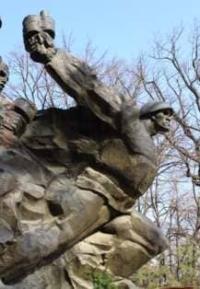
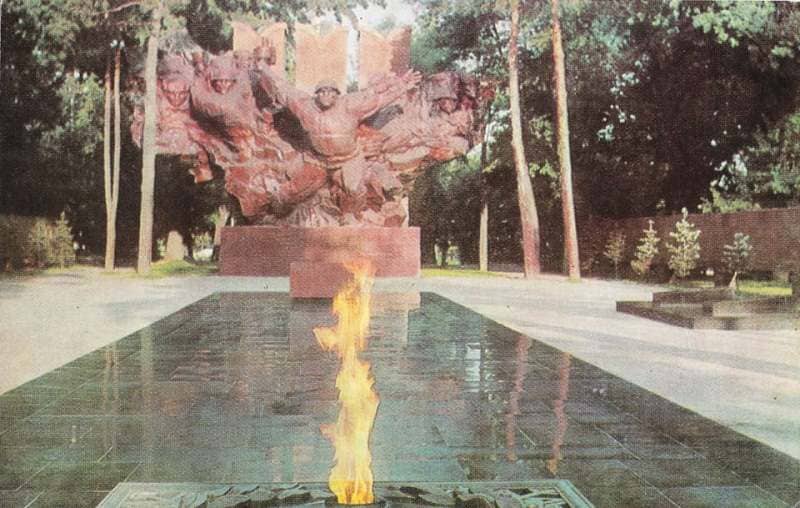
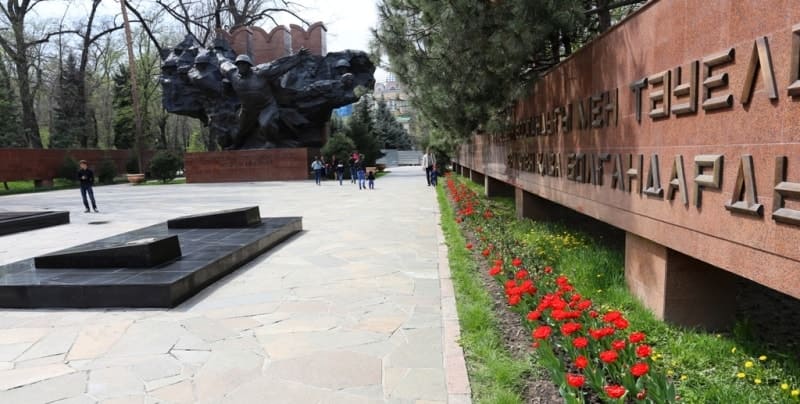
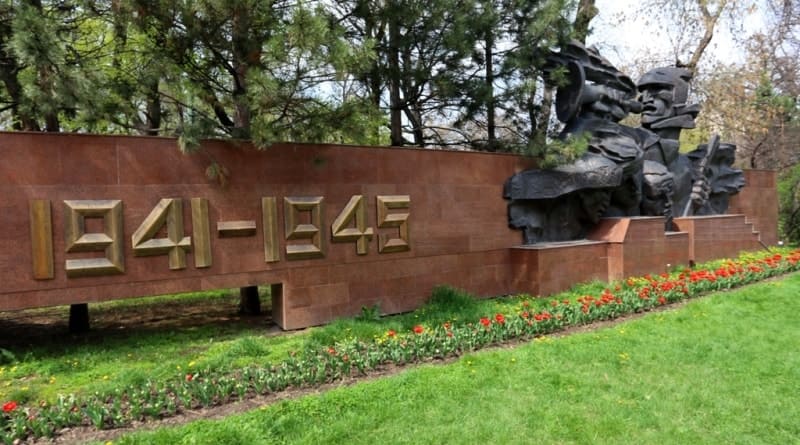
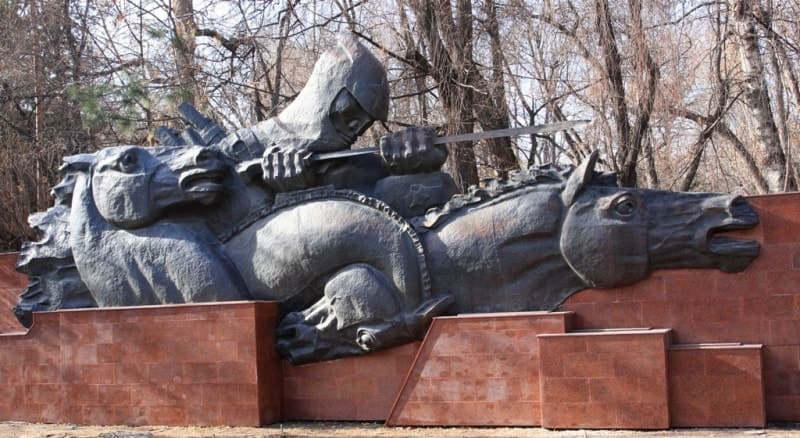
On May 8, 1975, a Glory Memorial was ceremoniously unveiled in Almaty's Panfilov Park of 28 Heroes. In 1974, architects T.K. Basenov, R.A. Seidalin, and V.N. Kim designed a memorial complex, which was to be located in the Panfilov Park of 28 Guardsmen.
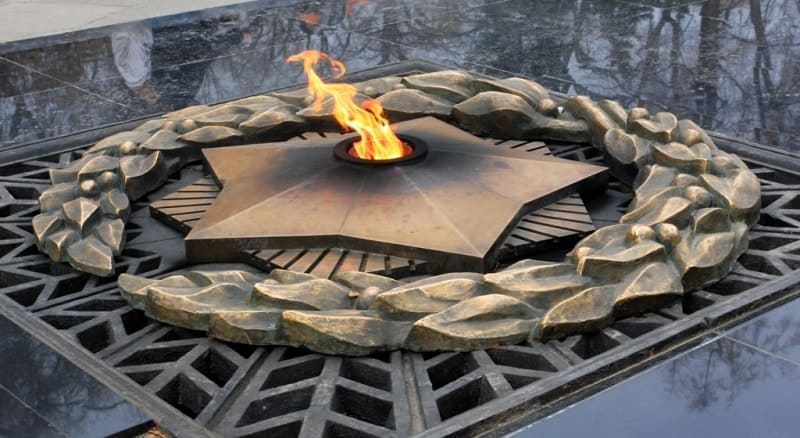
The plan included the construction of a triptych dedicated to the establishment of Soviet power in Kazakhstan and the Soviet people's victory in the Great Patriotic War, as well as a special pedestal for an eternal flame. The memorial complex was erected in the Park of 28 Panfilov Guardsmen to mark the 30th anniversary of the Victory in the Great Patriotic War over Nazi Germany.
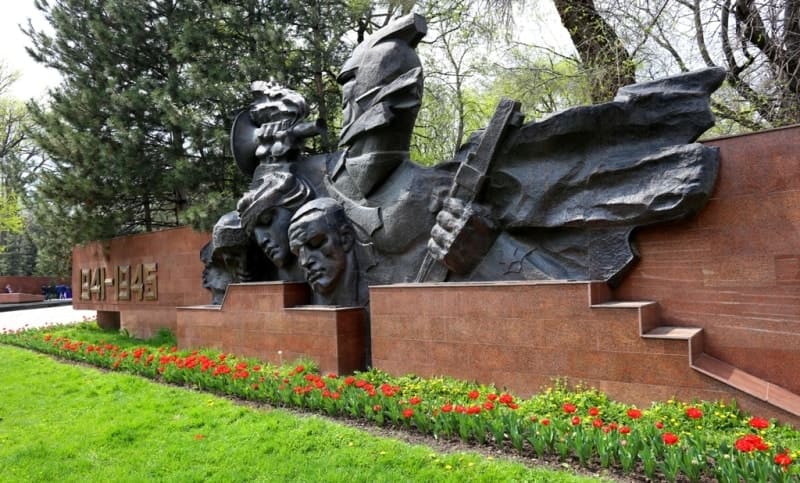
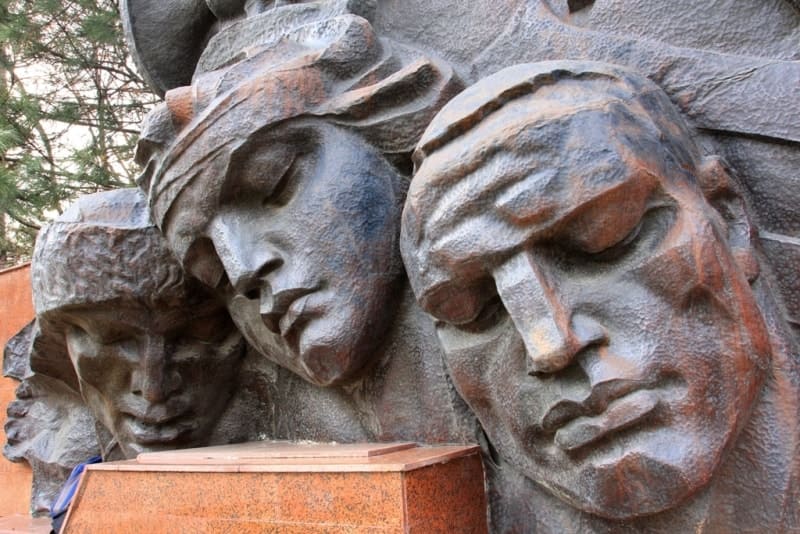
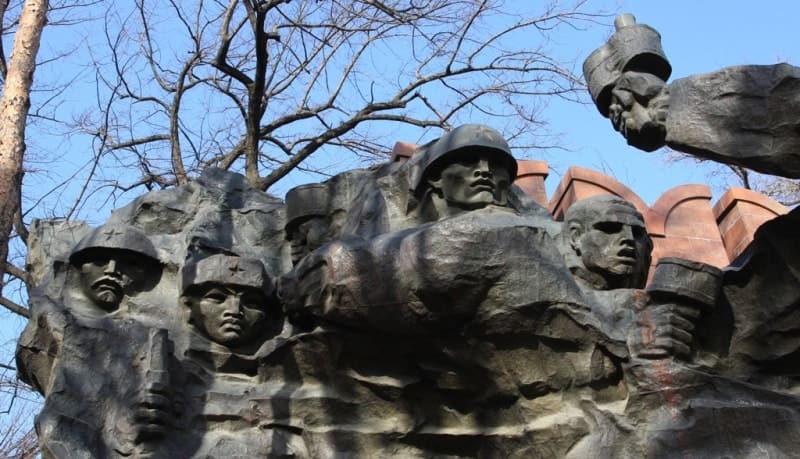
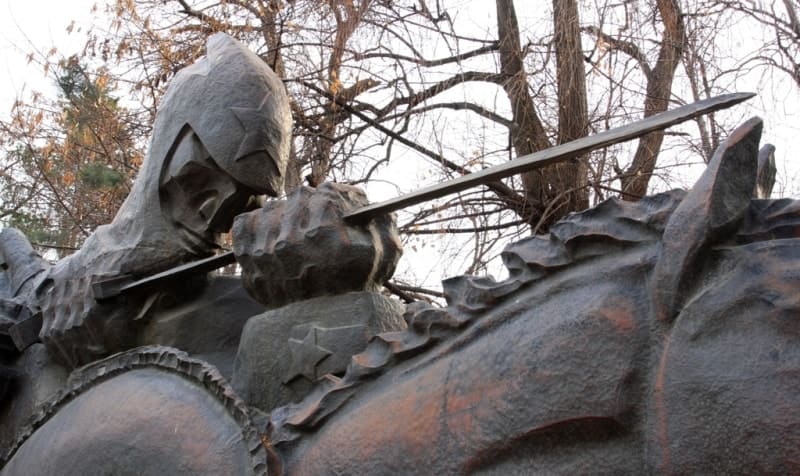
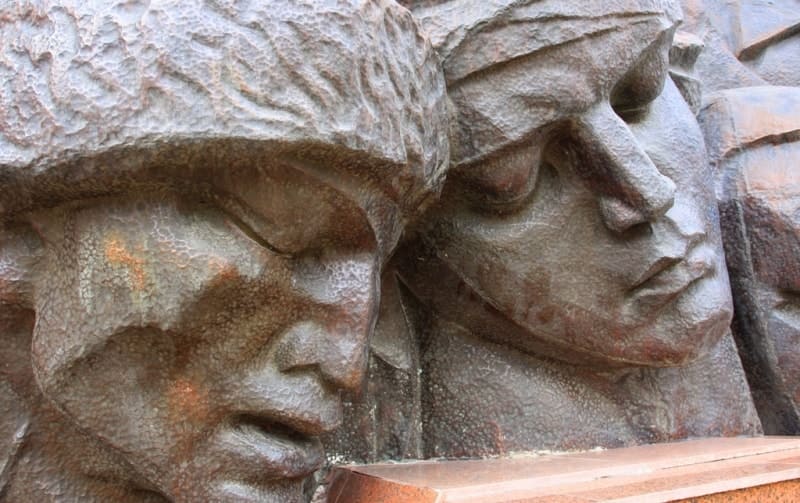
The sculptures were created by V.V. Andryushchenko and A.E. Artimovich. An eternal flame was lit within the complex. The Glory Memorial consists of three parts. The first part, the high relief "Oath" (on the left), is dedicated to the young fighters for Soviet power in Kazakhstan.
The central part of the triptych, "Feat," depicts the Panfilov heroes who defended Moscow with their lives. On the right is the composition "Trumpeting Glory," which lends an optimistic tone to the entire memorial; its images embody a hymn to the triumph of life.
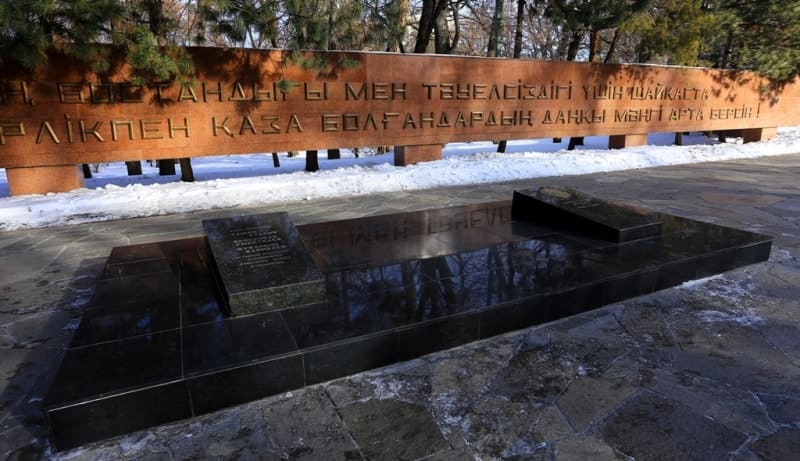
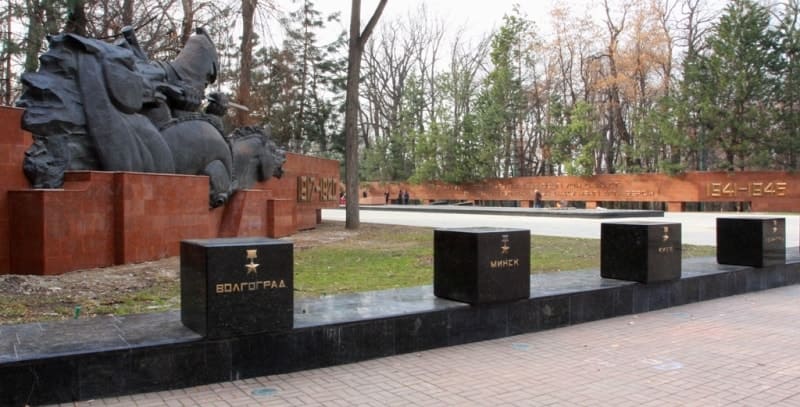
At the foot of the eternal flame are massive labradorite cubes, beneath which are sealed capsules containing soil delivered from the Hero Cities of the USSR. A high relief on the podium, created using copper embossing, recreates representatives of the 15 republics within the outline of the Soviet Union.
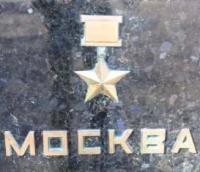
The words of a dying political instructor of the Panfilov Division are carved into the podium: "Russia is great, but there is nowhere to retreat. Moscow is behind us!" An architectural, historical, and cultural monument (inscribed on the register on April 20, 1980), it is part of the Almaty State Historical, Architectural, and Memorial Reserve (Resolution of the Council of Ministers of the Republic of Kazakhstan, No. 46, November 25, 1993).
In November 1941, the division won glory in the Battle of Moscow. Twenty-eight divisional soldiers engaged fifty enemy tanks at the Dubosekovo siding. In a four-hour battle, they disabled 18 armored vehicles, killing almost all, but none retreated.
In mid-November 1941, Nazi troops launched a general offensive on Moscow, committing 51 divisions (13 tank, 31 infantry, and 7 motorized), 650 combat aircraft, 1,500 tanks, and other military equipment. The 316th (later the 8th Guards) Rifle Division of General I.V. Panfilov, formed in Kazakhstan and Kyrgyzstan, took up a position in the Moscow defense sector as part of the 16th Army.
The division's soldiers held the line in the Volokolamsk direction. Fierce fighting unfolded along the line: Hill 251, the village of Petelio, and the Dubosekovo siding, held by the 1075th Rifle Regiment (commander I.V. Kaprov, commissar A. Mukhamedyarov).
The soldiers of the regiment's 4th Company demonstrated mass heroism, stopping the advance of enemy tanks rushing toward Moscow.
The immortal words of political instructor V.K. Klochkov:
"Russia is vast, but there is nowhere to retreat. Moscow is behind us!"
were interpreted by the soldiers as an order from their homeland and they entered into an unequal battle.
This heroic feat, which included Russians, Kazakhs, Ukrainians, and Kyrgyz, once again demonstrated the unbreakable fraternal friendship of the peoples of our country. By Decree of the Presidium of the Supreme Soviet of the USSR dated July 21, 1942, the title of Hero of the Soviet Union was awarded to: N. Ya. Ananyev, G. M. Bezrodny, N. N. Belashov (Bolotov), Y. A. Bondarenko, I. R. Vasiliev, P. D. Dutov, P. K. Emtsov, N. Esebulatov, D. M. Kaleinikov, V. G. Klochkov, A. Kozhabergenov, G. S. Konkin, A. Kosaev, A. I. Kryuchkov, N. G. Maksimov, G. S. Mitin, N. A.
Geographical coordinates of Glory Memorial are: N43°15'32 E76°57'18









Authority:
Guidebook "Alma-Ata", author Joseph Malyar, Moscow publishing house "Planet", 1990.
Photos by:
Alexander Petrov.