




You are here
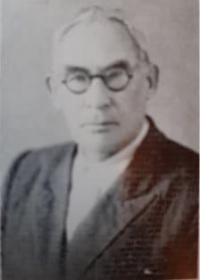
N. Palgov on Ulutau Mountains. 1950.
Ulutau Mountains in Central Kazakhstan.
"Most of the Kazakh people's monuments were located in three regions of what is now Kazakhstan: southern, central, and western, of which the most ancient ones are located in the first two. Major trade caravan routes from West to East have historically passed through the southern regions of what is now Kazakhstan, so cultural life in these areas arose early. The river valleys of Central Kazakhstan - the Kara-Kengir, Sary-Su, and Ulken-Dzhezdy - are home to the greatest concentration of architectural monuments from various periods. They were excellent pastures for many powerful nomadic families, and later even for individual khans and sultans, where they wintered, so the emergence of material culture monuments here was entirely natural. Moreover, caravan routes from the northern regions of Kazakhstan to the southern regions and to Central Asia (Maverannahr and Khorezm) passed through these areas. The architectural monuments created here by generations of folk artisans are remarkable works of folk architecture. Many of them, in terms of their architectural and artistic merits, deserve a place of honor among the monuments of the architectural heritage of the peoples of the USSR."
G.G. Gerasimov. "Architectural Monuments of the Kara-Kengir River Valley in Central Kazakhstan." 1957.
Natural sights of Ulutau Mountains.
Nature of Central Kazakhstan rarely delights the eye with beautiful views. For the most part, it consists of monotonous ridges crowded one after another, rocky hills, and patches of plains with bleak salt marshes squeezed in among them. All this, dressed in a gray shroud of kokpek, wormwood, and other tough, nondescript plants, fluttering in the heat of laziness in the haze of the shimmering, thick waves of sultry air, is perceived as a dull, tedious panorama, seemingly endless.
A bold leap from the monotonous forms and images of this panorama, the steep, massive mass of the Ulutau Mountains suddenly rises unexpectedly from its deepest depths.
Their main peak, Aulie-akmechet (Holy White Mosque), so named in memory of a former sanctuary there, stands 1,135 m. a. s. l. and 500-600 meters above its base. From the surrounding rolling steppe, it is visible for 80-100 kilometers from the observation point.
The Ulutau Mountains, located 96 km northwest of the famous mines of Dzhezkazgan, are a granite stock (Stock is a mass of rock (with a surface area of up to 200 square kilometers) formed in the Earth's crust by molten and subsequently solidified magma.
The Caledonian intrusion is the intrusion of magma into a terrestrial epoch during the Caledonian Transformation. The Devonian Period is one of the oldest geological periods, occurring more than 300 million years ago.) Formed by the Caledonian intrusion, the mountains were exposed from their overlying sedimentary rocks during the Devonian Period, and according to other researchers, much later.
They cover an area of 300 square kilometers, being three times longer than wide. Throughout this area, they consist of a spectacular combination of boulders, cliffs, rocks, and stone in all shapes and positions. The mountain slopes are extremely steep, especially the western ones.
At the same time, they are almost completely bare and smooth, like a paved street. Weathering has created numerous ledges on them, facilitating the ascent. The mountains are cut on all sides by deep, steep gorges. Their terrain includes sheer walls up to a hundred meters high or more.
Horseback riding is impossible across the main ridge, along it, or across it, and even walking is difficult. Two distinct river systems feed the ridge in Ulutau. The streams flowing down its western slopes belong to the Turgai River basin, while those flowing down its eastern slopes belong to the Sarysu River basin.
The most significant streams are the Aibas River in the west and the Karaganda River in the east. In the lower part of the mountains, close to their foothills, numerous springs with excellent cold water, the likes of which cannot be found anywhere else in the area, emerge from the alluvial deposits of the valleys.
In the mountain valleys, along the banks of streams and the thalwegs of dry riverbeds, dense riparian vegetation grows green. Meadowsweet, honeysuckle, bird cherry, buckthorn, hawthorn, willow, cotoneaster, rose hips, and others alternate among themselves.
In the wider sections of the valleys, birch and aspen forests are abundant. Blackcurrants and blackberries nestle under the cover of tall shrubs. Some valleys are rich in hay meadows, where blue speedwell, fireweed, yellow bedstraw, and other pale flowers bloom in vibrant patterns among the tall stems of wheatgrass and sedge in midsummer.
Closer to the mountain peaks, the bare rock of the slopes is covered with clumps of wild onions and thickets of juniper. The latter is mercilessly exterminated for fuel, despite its very low fuel value. The rich vegetation of the valleys, steep gorges, and dizzying cliffs have attracted the timid, slender roe deer, which decades ago were abundant in the steppe expanses of Central Kazakhstan.
But hunted by hunters, the roe deer is on the brink of complete extinction in its last refuge. In the XIVth century, the armies of the conqueror Timur marched along the western side of the mountains. A century later, the Kalmyks arrived here, leaving behind numerous burial mounds on the peaks of the hills.
In the 1940s, the Ulutavskaya stanitsa was founded at the foot of the mountains as a fortified outpost. The then tsarist government populated it with Cossacks and soldiers, appointed for this purpose by lot. In 1862, the village was abolished, and a post office block consisting of several residential buildings remained in its place.
However, over time, it, too, lost its significance. Now, on the ruins of the former village and block, a Kazakh settlement has grown up, complete with a post office, radio station, school, and other cultural facilities of a substantial settlement. The Soviet settlement of Ulutau is one of the economic entities of the Karsakpai Combine.
Crop fields, hayfields, and pastures belonging to the combine are concentrated around it. To ensure moisture for the crops during the summer months, the locals construct earthen dams to hold back spring snow runoff. One of the reservoirs thus formed, Lutpai Pond, is located behind the village in the Karaganda River valley.
It is over 700 meters long and about 500 meters wide. Its waters irrigate several hundred hectares of cultivated land of the Ulutau state farm. Near the village of Ulutau is a rest home and sanatorium for miners. A pioneer camp and kindergarten also operate here.
The Ulutau mountains offer other useful entertainment for both healthy and ill people. Interesting walks and excursions into the depths of the gorges and to the peaks are also available. The views from the mountain peaks are magnificent, revealing the steppe below, with its ridges gleaming blue on the horizon.
On the western slopes of the mountains, near the headwaters of the Aibas River, at an altitude of 600 meters above sea level, are two small caves. Their gaping openings in the steep cliff are visible from afar. One cave, with a high, sloping vault, stretches like a corridor for more than 10 meters; another is a vertical fissure with a round opening.
The mountains offer worthy sites for studying rock climbing and mountaineering techniques.
Authority:
"The Nature of Kazakhstan in Essays and Pictures." N.N. Palgov. Publishing House of the Academy of Sciences of the Kazakh SSR. Alma-Ata. 1950.