




You are here
History of Shymkent.
Historical tours of Shymkent.
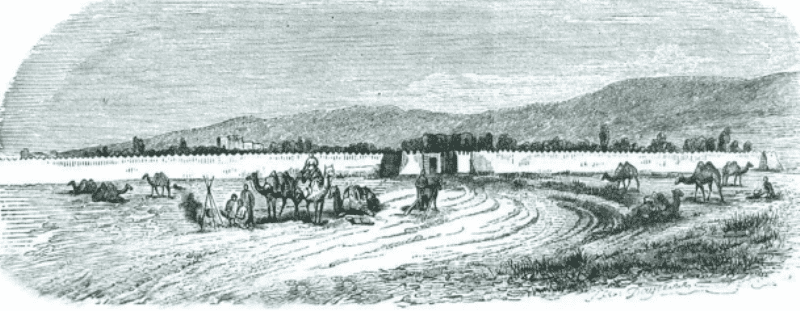
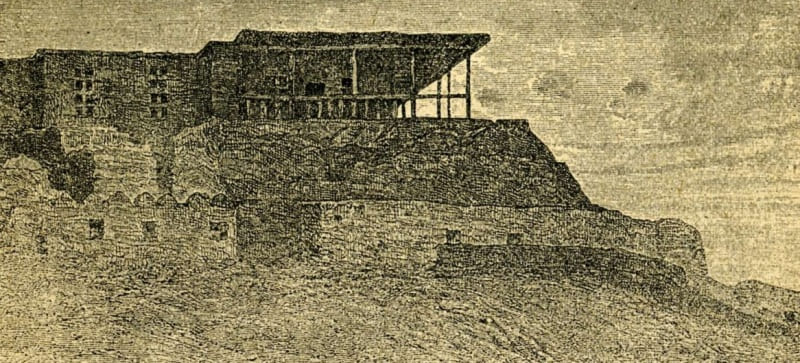
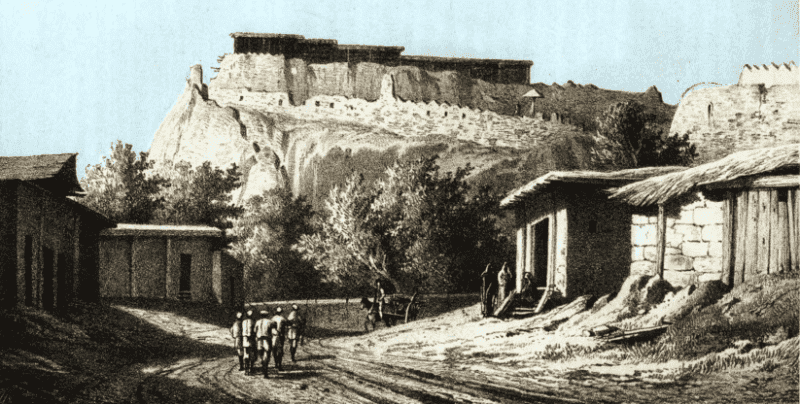
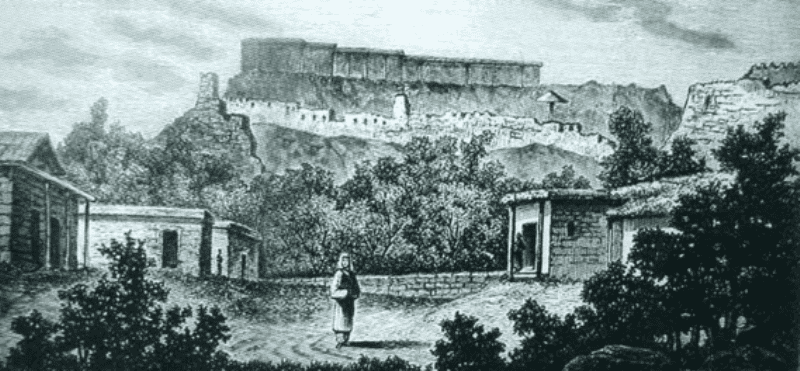
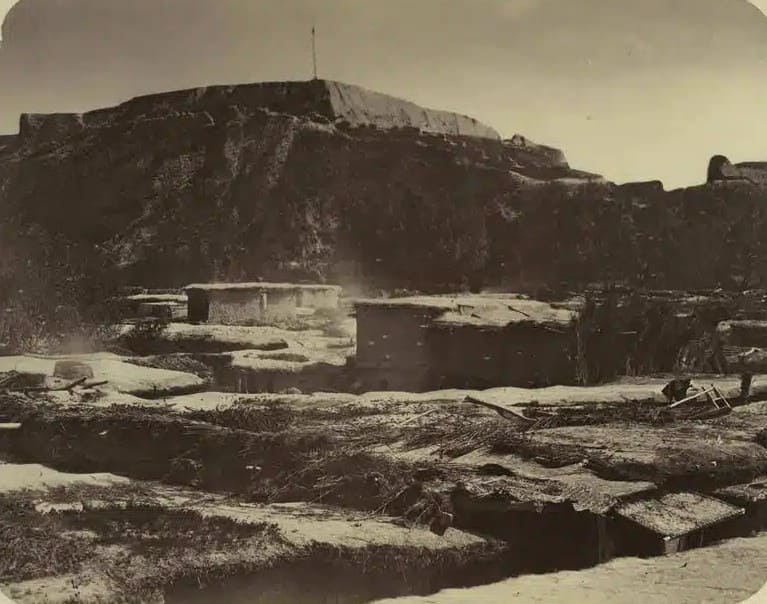
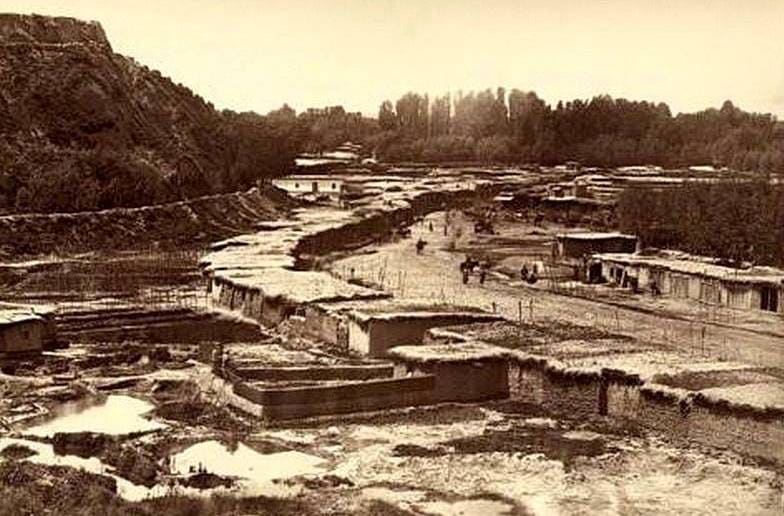
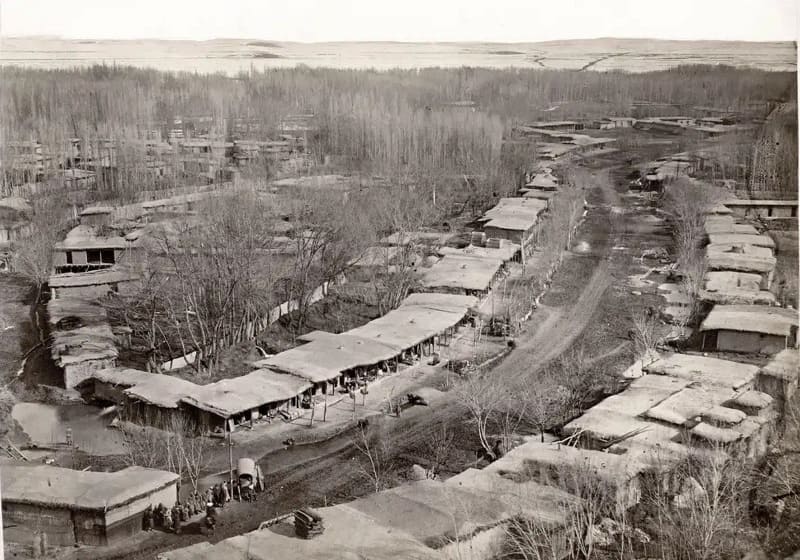
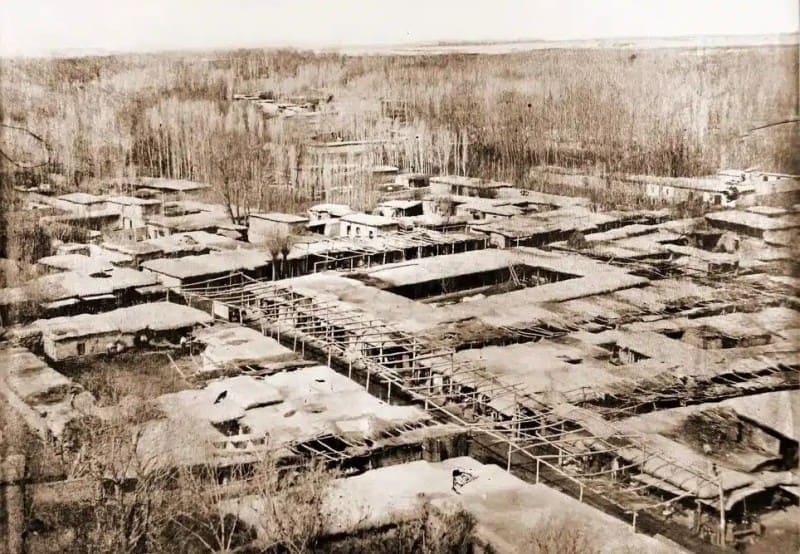
"...the town of Chemkend is situated by the Badam River, in a hollow; in the middle of this hollow, on elevated ground, stands a small fortress enclosed on all sides by a high clay wall. Access is via a narrow road from the riverside - wide enough for only a single horse to pass. Many water-filled canals have been dug within the fortress, fed by the river through openings in the wall; mills have been built along these canals. The commander’s house is also located within the fortress, which accommodates a garrison of up to 250 troops. There are approximately 600 houses in Chemkend, and the city's streets are narrow and irregular. The houses are built in the same style as those in the settlement of Cholak-Kurgan; some are quite substantial."
Nikolai Ilyich Potanin. "The Kyrgyz Steppes and the Kokand Khanate in the Early XIXth Century, Based on the Account of Khorunzhy N.I. Potanin." 1830.
Sightseeing walk through Shymkent.
Origin of Name "Shymkent."
The modern name of the city, Chimkent, consists of two parts: the term "kent" (meaning city, settlement, or locality in Iranian languages) and the qualifier "chim." Historically, the "shym-chim" component also appeared in variants such as "chem," "chemengeny," "chimin," and "chimingeny," signifying "meadow" or "grass" in Iranian languages.
According to V. V. Bartold and E. M. Murzaev, the city's name should be interpreted as deriving from the Sogdian "chimin/chemen" (meadow, pasture, or flowering river-valley) with the addition of the suffix "kent." V. V. Radlov interprets "chaman-chimen" (an Ottoman term derived from Persian) as meadow, turf, "God's grass," or fenugreek.
V. V. Bartold also cites "chaman" as an Arabic loanword meaning "grove." The traveler G. N. Potanin also recorded the form "ket" ("Chimket") in 1830. In 1984, E. M. Murzaev (citing L. I. Rozova, 1973, and V. I. Savina, 1972) explained "chamen-chemen" as "turf, the top layer of soil densely interwoven with herbaceous vegetation."
"The name of the city of Chimkent derives from the words “chim” (turf) and “kent” (city)... Local residents date the city's founding to the 12th century, noting the presence of the tomb of the saint Baba-Dervish, a contemporary of Khoja Ahmed Yasawi":
this information is taken from A. Dobrosmyslov's book *Cities of the Syr-Darya Region*.
First mentions of Shymkent.
A settlement existed on the site of modern-day Shymkent as early as the turn of the 3rd and 2nd centuries BC. This is evidenced by discovered artifacts that have parallels among materials from the ancient settlement of Afrasiyab (Samarkand).
Among surviving written sources, Shymkent was first mentioned by the Central Asian historian Sharaf al-Din Yazdi (1425) in the book “Zafar-nama” ("Book of Victories") during his account of Timur's military campaigns. Chimkent (Shymkent) existed as a settlement as early as the VIth century AD; this conclusion links the city to the famous traveler and envoy Xuanzang, who mentioned Isfijab-Sairam in his records, leading to the assumption that Chimkent - as a suburb of Isfijab - must have existed as well.
Attempts to substantiate the settlement's origins at the site of Chimkent during the Vth-VIIth centuries AD - whether based on an analysis of the toponym “Chim-“ (or “Shym-“) “Kent”, on excavations of Scytho-Sarmatian-era burial mounds near the phosphorus plant on the right bank of the Badam River (dating from theIIIrd century BC to the Ist–IInd centuries AD), or on the hypothesis that Chimkent is over 1,300 years old due to the presence of burial mounds at the end of Al-Farabi Street (Ist-Vth centuries AD) - are naive and cannot serve as a basis for resolving this issue.
It should be remembered that burial mounds, and even the construction of medieval *mazars* (mausoleums) over the graves of prominent secular and religious figures, often took place in the open steppe. It is a widely held view that the city existed in the XIIth century.
No written evidence confirming this fact has survived. Finally, the earliest known mention of the city appears in the «Zafarnama» - a book by the historian Sharaf al-Din Yazdi, who chronicled the era of Timur and the Timurids - which records that in 1365-1366... ...according to the modern calendar, Timur, while setting out on a campaign against Moghulistan, located his supply trains near Sairam, in the settlement of Chymkent.
Initial finds from archaeological excavations in Shymkent.
This marks the first specific mention of Chimkent in written sources. Traces of the earliest human presence in the territory of modern Shymkent have been discovered in the form of chance finds - specifically, Bronze Age (2nd millennium BC) ceramic vessels belonging to the so-called Andronovo culture, found near the oil and fat processing plant.
A chance find of a Scythian-Saka bronze dagger (akinakes) near the chemical-pharmaceutical plant also dates back to the 1st millennium BC. In 1888, N. Ostroumov, a member of the Turkestan Circle of Archaeology Enthusiasts, conducted minor excavations near the city on the right bank of the Badam River at the Alva-Kent hill; there, he discovered clay burial vessels (ossuaries) containing human skeletal remains, dating from the VIIIth-Xth centuries.
Ceramic finds from the Xth-XIIth centuries have been recorded in various parts of the city. Excavations conducted by the Chimkent Pedagogical Institute between 1970 and 1980 - carried out at the old fortress site (citadel) and in the Old City area - yielded materials dating from the XVth–XVIIIth centuries.
The city's founding is dated to 1365-1366, accounting for the difference between the lunar Muslim calendar and the solar calendar. Over the centuries, the city frequently changed hands between different conquerors.
Shymkent at turn of XVIIIth and XIXth centuries.
Over the centuries, the city frequently changed hands between different conquerors. In the early XIIIth century, the troops of Genghis Khan entered Mawarannahr via the Sairam Oasis, and the area subsequently became part of the conqueror's domains.
In the early XVIth century, Shymkent became part of the Kazakh Khanate; later, during the XVIIth and XVIIIth centuries, it was subjected to invasions by Dzungar conquerors. Despite countless wars and internecine conflicts that took a heavy toll on the population's livelihood, the Sairam Oasis remained a region of advanced agriculture, horticulture, and craftsmanship.
During the late XVIIIth century and the first half of the XIXth century, the Khanates of Kokand and Bukhara vied for control of Shymkent. From 1810 to 1864, the city served as a fortified military camp under Kokand rule, housing a large garrison and the residence of the Khan's governor.
In 1821, the Kazakh Sultan Tentek-tore led an uprising against the Kokand Khanate. Rebel forces stormed Sairam and Shymkent, but substantial reinforcements arrived from Kokand and, after several battles, suppressed the rebellion. In the early XVIth century, Shymkent became part of the Kazakh Khanate; later, during the XVIIth and XVIIIth centuries, it was subjected to invasions by Dzungar conquerors.
Despite countless wars and internecine conflicts that took a heavy toll on the population's livelihood, the Sairam Oasis remained a region of advanced agriculture, horticulture, and craftsmanship. During the late XVIIIth century and the first half of the XIXth century, the Khanates of Kokand and Bukhara vied for control of Shymkent.
From 1810 to 1864, the city served as a fortified military camp under Kokand rule, housing a large garrison and the residence of the Khan's governor. In 1821, the Kazakh Sultan Tentek-tore led an uprising against the Kokand Khanate. Rebel forces stormed Sairam and Chimkent; however, substantial reinforcements arrived from Kokand and, after several battles, suppressed the rebellion.
In 1864, during a military operation, Russian troops succeeded in wresting Chimkent from the Kokand forces. Chernyaev - the future Governor-General of Turkestan, who held the rank of colonel at the time -undertook the mission with a very limited force.
Chernyaev’s small detachment captured the fortress of Aulie-Ata and subsequently, in July 1864, took Chimkent, a stronghold considered impregnable. The troops entered the fortress via an aqueduct - passing through a vaulted opening in the fortress wall - and the garrison was so stunned by the enemy's sudden appearance within the city walls that they offered almost no resistance.
For the capture of Chimkent, Chernyaev was awarded the Order of St. George, 3rd Class. By the end of the XIXth century, the city's trading quarters housed 19 textile shops, 87 hardware and grocery stores, 70 general stores, 50 teahouses, 10 caravanserais, 9 eateries, and 27 flour shops; by the early 20th century, there were 3 oil mills, 5 tanneries, 15 brickworks, 26 flour mills, 4 small cotton-ginning plants, 15 smithies, and 15 soap-making workshops.
It was a district town in the Syr-Darya Oblast, located 114 versts north of Tashkent at an elevation of 1,650 feet above sea level, situated on the Badam River - a left tributary of the Arys River, which flows into the Syr Darya from the right. Shymkent is situated in an area of Tertiary formations, which are overlain by loess on the right bank of the Badam River.
Its rather picturesque location, relatively moderate summer temperatures, abundant greenery, and excellent water - sourced from the Kachkarata springs - make Shymkent a health resort. ...attracting summer residents from Tashkent and patients who came here for the summer to undergo *kumis* therapy.
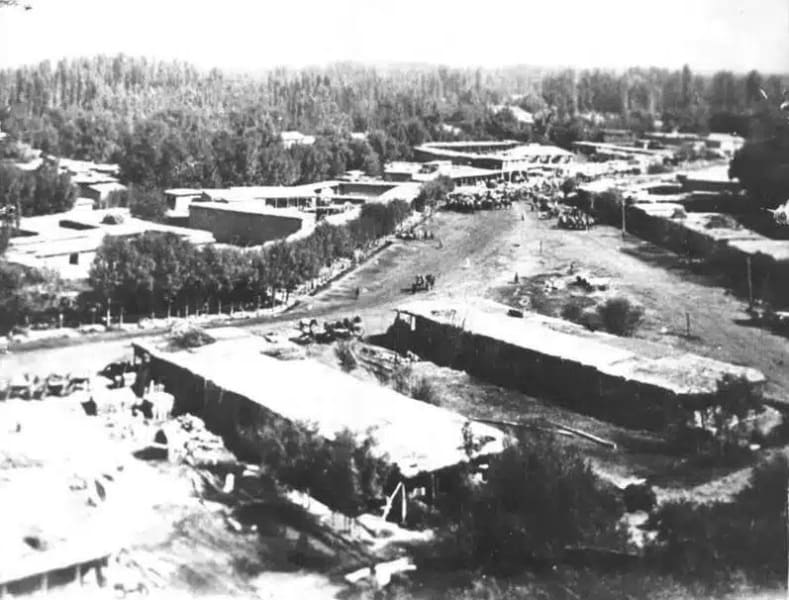
Population: 12,441 (768 Russians, 150 Jews, and 11,496 Muslim Sarts). There were 105 houses in the Russian section of the city and 1,886 in the native section. Facilities included two Orthodox churches, 34 mosques, three schools (a municipal two-class school for boys, a parish one-class school for girls, and a Russian-native school), and 16 "mektebes" (traditional Muslim schools).
Public amenities included the Public (Chernyaevsky) Garden, a public assembly hall, and the A. S. Pushkin Library. unicipal revenue stood at 11,760 rubles. A plant established in 1883 to produce the medicinal drug santonin (originally the Santonin Plant, later the Chemical-Pharmaceutical Plant) played a significant role in the establishment and development of the city's economy.
From this time on, the city became an important transit hub connecting European Russia and Western Siberia with Central Asia.
Shymkent in the XXth Century.
From this time on, the city became an important transit hub connecting European Russia and Western Siberia with Central Asia. In the summer of 1883, on the southern outskirts of the city - along the banks of the Badam River and near the road to Tashkent - merchants Nikolai Ivanovich Ivanov and Nikifor Prokofyevich Savinkov (Ivanov’s son-in-law) began construction on what was then the first pharmaceutical enterprise in Central Asia: the santonin plant (known as the "Santonin" partnership or the "Savinkov and Nikitin Santonin Plant").
By the autumn of 1885, the facility had produced its first 189 tons of santonin. It later served as the foundation for one of the USSR's largest pharmaceutical plants—known as the F. E. Dzerzhinsky Plant (from June 5, 1925) until Kazakhstan gained independence, and now operating as JSC "Chimpharm."
The enterprise is currently part of the Polpharma Group (Poland). In 1914, to mark the 50th anniversary of Shymkent’s incorporation into the Russian Empire, the city was renamed Chernyaev; however, the Soviet authorities restored its original name in 1924.
A lead plant was built in Shymkent in the 1930s, accounting for 70% of the USSR's total lead production. An oil and fat processing plant, a hosiery factory, and a mirror factory were also commissioned. In 1932, an agricultural aviation base was established, laying the groundwork for the creation and development of the city's airport.
During the Great Patriotic War, Shymkent became one of the Soviet cities that hosted evacuated industrial enterprises; seventeen factories and plants were relocated there from the frontline zones. The city produced tank spare parts, artillery shells, metal, lead, optical instruments, and other goods.
Two out of every three bullets fired at the Nazis were made from Shymkent lead. Seven Shymkent residents were awarded the title of Hero of the Soviet Union. The post-war decades of the 1950s and 1960s were marked by rapid economic growth in the city.
Alongside industrial and economic growth, the city saw a rise in crime; a significant proportion of the urban population had criminal backgrounds, leading to increased speculation and theft. Drug trafficking also developed, and Chimkent became one of the country's major hubs for the illicit drug trade.
At the same time, corruption grew within the police force - a fact noted in the memoirs of V. A. Liventsov, the head of the Chimkent Regional Party Committee at the time. The city’s transformation into a transit point for scarce goods - first to China and later, from the mid-1960s, to Siberia and Mongolia - combined with organized drug trafficking rings that frequently used heavy-truck drivers as couriers, sparked mass protests in 1967.
These protests escalated into bloody clashes and riots, involving attacks on administrative buildings (including the City Party Committee and the Internal Affairs Directorate), attempts to storm the prison, and violent reprisals against local police officers accused of extorting money from drivers.
The suppression of the protests resulted in deaths and injuries; hundreds of people were arrested and sentenced to long prison terms. Official figures indicate that eight people died and over fifty were injured during the events of June 12-15, 1967.
Soviet state security agencies identified local Interior Ministry officials responsible for the brutal crackdown; following an investigation, these officials were dismissed from their posts or transferred to other regions. On September 8, 1992, the Kazakh authorities changed the Russian-language spelling of the city's name to "Shymkent."
Authority:
Nikolai Pavlovich Podushkin. "When Was Shymkent Born?" Historical and informational guidebook. Shymkent, 1998.
https://ru.wikipedia.org/wiki/%D0%A8%D1%8B%D0%BC%D0%BA%D0%B5%D0%BD%D1%82