




Вы здесь
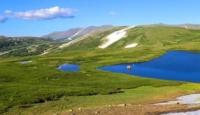
Beloubinskoye Second lake.
Sights of the West-Altay reserve.
"Loving one's land, knowing its unique features, its riches, its history - true patriotism is nurtured by these finest feelings for one's native lands…"
M. I. Kalinin. "On Education and Training" (Uchpedgiz, 1957, p. 160).
Natural Wonders of Kazakhstan Altai.
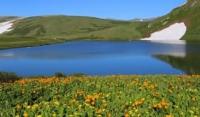
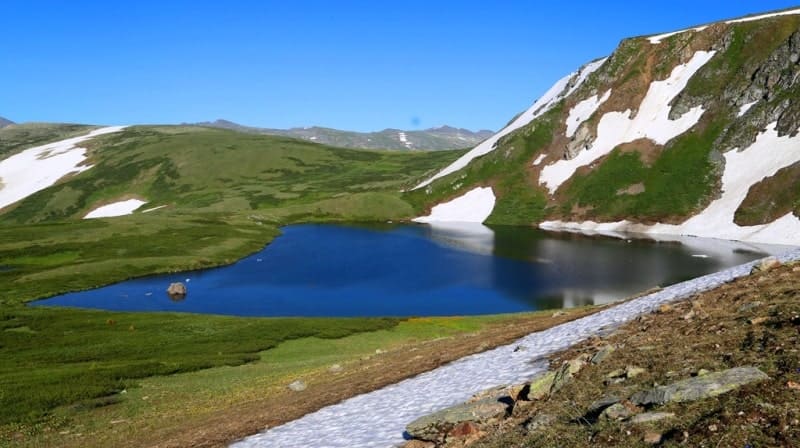
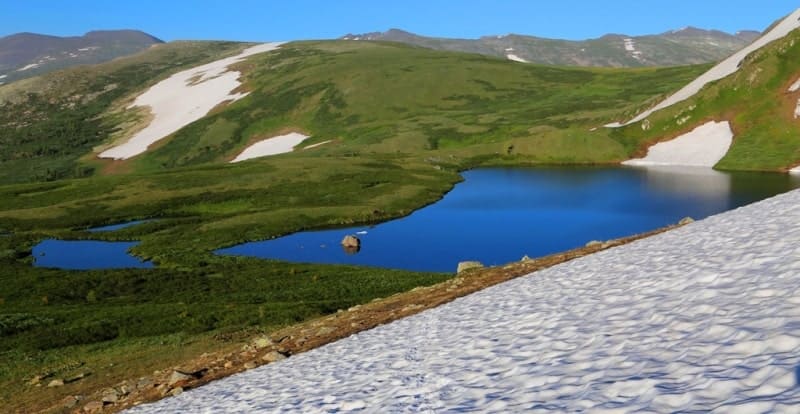
Second Beloubinskoye Lake is a freshwater moraine-glacial lake located in the highlands of eastern Kazakhstan, at an altitude of 2,062 m. a. s. l.
The lake is located in the Ridder city administration of the East Kazakhstan Region, within the Altai Mountains, between the eastern spurs of the Ivanovskiy Range and the western slopes of the Koksu Range. Second Beloubinskoye Lake is part of a group of four closely located high-mountain lakes, collectively known as the Beloubinsky Lakes.
Despite their close proximity, each lake is a distinct natural feature with its own distinct topography, basin contours, and surrounding landscape. Within the Beloubinsky lake system, Lake Second occupies a unique intermediate position. It is located approximately 891 meters east of Lake First Beloubinskoye and 820 meters southwest of Lake Third Beloubinskoye.
Lake Kedrovoe is approximately 1.1 kilometers north, and Lake Shcherbakov is 1.9 kilometers northwest. This location creates a unique cluster of high-mountain bodies of water within a relatively small area. Their proximity is a characteristic feature of this part of the Altai, where the mountainous terrain and the activity of ancient glaciers contributed to the formation of numerous small lake basins.
Lake Second Beloubinskoye differs significantly in size from Lake First Beloubinskoye. Its length from southwest to northeast reaches 299 meters, and its maximum width in the central part is approximately 233 meters. Its water surface area is 54,878 square meters, or approximately 5.5 hectares, and the shoreline reaches 920 meters.
Thus, Lake Second Beloubinskoye is one of the largest bodies of water in its group by area. Its relatively wide shape creates a more open water area than that of neighboring Lake First Beloubinskoye, which extends in a different direction. At the same time, the considerable length of the shoreline indicates the rather complex contours of the lake basin.
The moraine origin of the lake is associated with the ancient activity of mountain glaciers. During periods of cold weather, glacial masses slowly moved along the mountain valleys, eroding and reworking the rocks. As they retreated, the glaciers left behind accumulations of debris - morines - which formed natural depressions and barriers in the relief.
Water subsequently accumulated in these basins, forming high-mountain lakes. The current appearance of Lake Second Beloubinskoye is the result of the long-term interaction of glacial processes, precipitation, seasonal snowmelt, and the local mountainous topography.
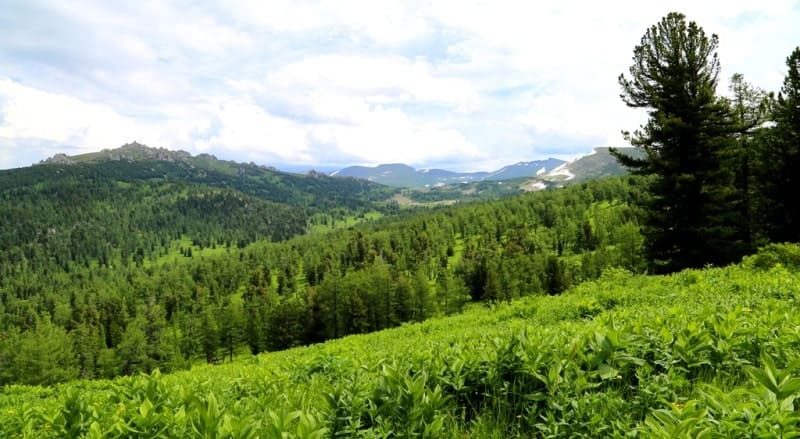
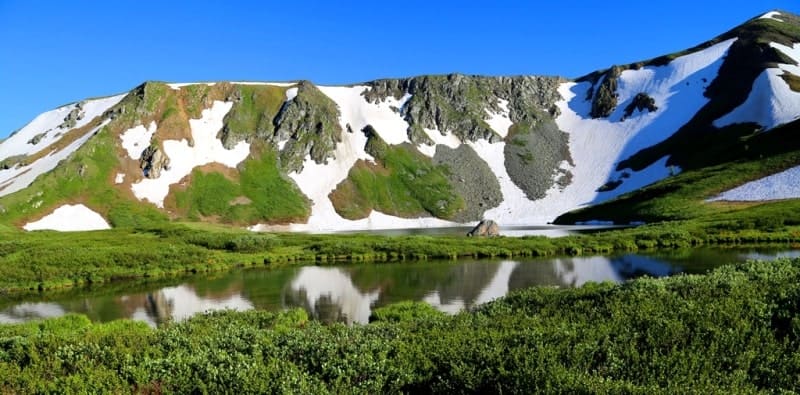
At high altitudes, a significant portion of the moisture accumulates as snow, and the spring and summer melting of snow masses helps replenish the lake's water resources. The lake is surrounded by the harsh and picturesque landscapes of the Altai Mountains.
Rocky slopes, moraine deposits, and patches of mountain vegetation adapted to the short growing season predominate here. An altitude of over two thousand meters determines a cool climate, long winters, and a late onset of spring. For most of the year, the lake's natural appearance is determined by the snow and ice conditions.
After the snow melts, a water surface surrounded by mountain slopes becomes visible, and during the warmer months, high-mountain meadows and isolated patches of vegetation take on vibrant hues, contrasting strikingly with the rocky surfaces of ancient moraines.
Of particular interest is the spatial relationship between Lake Second Beloubinskoye and other bodies of water in the region. The four Beloubinskoye lakes form a unique group of high-altitude bodies of water located at short distances from one another.
Studying them together allows us to better understand the characteristics of the ancient glaciation of this part of Altai and trace how glacial processes shaped the modern topography. At the same time, each lake has its own distinct morphology.
Lake Second Beloubinskoye is smaller and more elongated, while Lake Second is significantly larger and more compact. Therefore, when visiting these places, travelers can observe how the character of lake basins and the surrounding landscapes changes within a single high-altitude region.
The Second Beloubinskoye Lake is of interest not only as an independent natural feature, but also as part of a unified high-mountain complex, which particularly clearly demonstrates the interconnection between the geological structure of Altai, ancient glaciation, and modern hydrological processes.
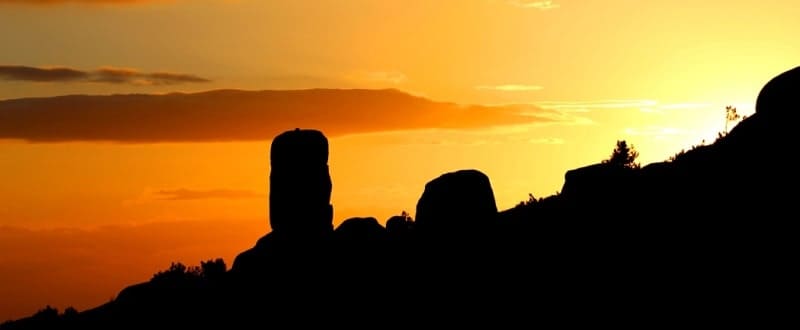
The remoteness from large settlements and the inaccessibility of the high-mountain terrain contribute to the preservation of the natural environment. For travelers, explorers, or photographers, this is one of those places where the true ruggedness and grandeur of the Altai Mountains can be felt.
Lake Second Beloubinskoye, located among the eastern spurs of the Ivanovskoye and western slopes of the Koksu Range, is a striking example of the high-mountain moraine-glacial landscape of Eastern Kazakhstan. Its large surface area, the distinctive shape of its basin, and the proximity of several other lakes make this area particularly interesting for studying the natural processes that shaped the modern appearance of the Altai highlands.
Geographic coordinates of Lake Vtoroye Beloubinskoye are: N50°17'13 E84°08'53




Authority and photos by:
Alexander Petrov.