




Вы здесь
History of Khudjand.


Historical monuments of Khudjand.
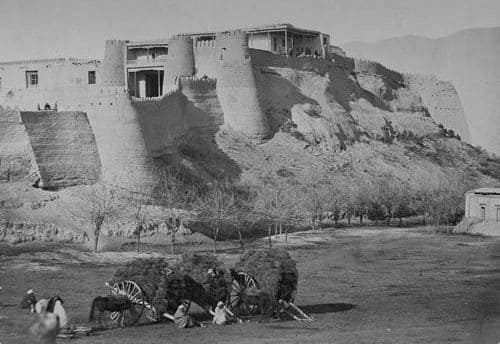
“Another city in Fergana is Khujand. It is located twenty-five yigachs (miles) west of Andijan; from Khujand to Samarkand it is also twenty-five yigachs (miles) away. This is one of the ancient cities; Sheikh Maslakhat and Khoja Kamal (come from it). The fruits there are very good; Khujand pomegranates are famous for their excellent quality. As they say: “Samarkand apples,” so they say: “Khujand pomegranates.” But nowadays Marginan pomegranates are much better. The Khujand fortress stands on a high place. The Seykhun River flows past Khujand on the northern side, at an arrow’s flight distance from the fortress. To the north of the fortress and the river stands a mountain called Mutu-Gil; they say that turquoise deposits and other mines are located on this mountain; there are many snakes on the mountain. In Khujand there are excellent places for hunting animals and birds. White kiyik, deer, bugu marals, pheasants, and hares abound there. The air in Khujand is very putrid; many people get fevers in the fall. It was said that even sparrows got fevers. They say the air there is putrid because of the mountains on the northern side."
"Babur-Name." Events of the year 899. Babur's notes.
Photo tours in Khujand.
According to Greek historians, in 329 BC, Alexander the Great founded a fortified fortress on the Syr Darya River, named after him. Subsequently, thanks to its advantageous geographical and strategic position, the fortress became heavily populated, growing into a large city for its time, known in history as Alexandria the Extreme (Eskhata).
The question of the exact location of this ancient city has puzzled scholars around the world for several hundred years, and it was only in the mid-20th century that the identity of Khujand in the 4th century BC and Alexandria Marginalis (Eskhata) of 329 BC was confirmed.
Occupying a favorable geographical position in the Fergana Valley, Khujand flourished for a long time, growing in wealth, and building palaces, mosques, and citadels. In the 13th century, Khujand was captured and destroyed by the troops of Genghis Khan.
In the late XIVth and early XVth centuries, Khujand and the surrounding region were part of the kingdom of Timur (Tamerlane). In the XVIIIth and XIXth centuries, Khujand expanded greatly, becoming one of the largest cities in Central Asia, rivaling Kokand and Bukhara in territory.
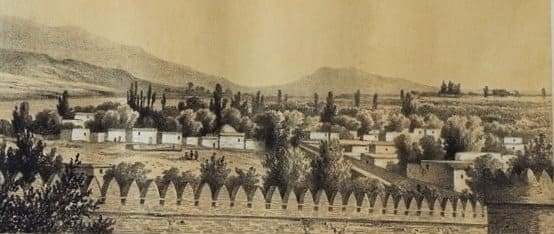
Khujand in the late XIXth and early XXth centuries was a typical Central Asian city, with crooked, narrow streets lined with adobe houses huddled together, bustling bazaars, and rows of all kinds of artisan workshops. Havakanta (City of the Sun), Alexandria Eskhata (the "Final," which belonged to Alexander the Great), and Khujand (which outlived Genghis Khan and Tamerlane) - all these are the names of a single city, over 2,500 years old.
It wakes up earlier than the capital: before dawn, people rush through the streets to do business.Farmers carry goods to the famous Panjshanbe market. In the evening, after dark, amusement parks open for business and are filled with families strolling.
One theory holds that the city's name comes from "khub jan" - "good people." I'm a native Dushanbe resident, and I won't say Khujand is better in every way; however, it surpasses the capital in many ways. It's a little cleaner, more cultured, friendlier, more cautious, and smarter.
There's a very strange place in the city center. Next to a dilapidated mosque (I'm told it's about 350 years old) stands a mighty ancient tree. It exudes time. According to legend, Tamerlane planted it. Regardless, this place is so unusual that it's worth visiting and experiencing the spirit of history.
The city has a long history. Many historians and archaeologists believe that the legendary city of Alexander-Eskhata (Alexandria the Extreme) was built by Alexander the Great on the site of today's Khujand (5th century BC). Since ancient times, Khujand, located at the crossroads of Eastern trade routes, has been one of the most important economic, military-strategic, and cultural centers of Transoxiana.
The Great Silk Road, connecting ancient Greece, Rome, Asia Minor, Egypt, and Iran with India, China, and Japan, passed through it. Khujand is the second-largest city in the country, located in the north of the republic. It is one of the most ancient cities in Tajikistan, founded during the time of Alexander the Great, approximately 2,500 years ago.
According to Greek historians, in 329 BC, Alexander the Great founded a fortified fortress named after himself on the river Tanais, or Jaxartes (modern-day Syr Darya), which was intended to become the natural border of his empire. Its Greek warriors and the surrounding "barbarians" (that is, the local population), which, of course, initially could not have been a city in the full sense of the word.
But subsequently, thanks to its advantageous geographical and strategic position, it began to be intensively populated, turning into a large city by its size, known in history as Alexandria the Extreme (Eschata). The question of the exact location of this ancient city puzzled scholars around the world for several hundred years, and it was only in the mid-XXth century that the identity of Khojent of the IVth century BC and Alexandria the Extreme (Eschata) of 329 BC was confirmed.
It has also been suggested that Alexandria the Extreme arose not from scratch, but on the site of an urban center, known as Archaic Khojent, which already existed on the left bank of the Syr Darya when the troops of Alexander the Great arrived.
Occupying a favorable geographical location in the Fergana Valley, Khujand flourished for a long time, growing wealthy and building palaces, mosques, and citadels. In the XIIIth century, it was captured and destroyed by the troops of Genghis Khan.
From the IXth to the XIIth centuries, Khujand consisted of the city proper (shahristan), the old fortress (kuhendiz), and the artisan and trading suburb (rabad). All these parts of the city were fortified with defensive walls. The city was subsequently restored and began to play an important role as a trade transit hub on the Great Silk Road.
In the late XIVth and early XVth centuries, Khujand and the surrounding region were part of the kingdom of Timur (Tamerlane). In the XVIIIth and XIXth centuries, Khujand expanded greatly, becoming one of the largest cities in Central Asia, rivaling Kokand and Bukhara in territory.
The city had its own ruler, the bek. Khujand in the late XIXth and early XXth centuries was a typical Central Asian city, with crooked, narrow streets lined with adobe houses huddled together, bustling bazaars, and rows of artisan workshops. The city was divided into numerous small neighborhoods (mahalla), each with its obligatory mosque, teahouse, and pond (khauz).
These neighborhood mosques and teahouses served as gathering places for local residents to discuss issues affecting their common interests. Each neighborhood was dominated by a particular craft. Khujand was located on the border between the Emirate of Bukhara and the Khanate of Kokand and was the target of decades of conflict between them.
In 1866, it was annexed by Russia, ending the destructive internecine wars over it between Bukhara and Kokand. After the Russian conquest in the XIXth century, the city became the center of a district, where industry rapidly developed. A railroad was built here.
During the Soviet era, Khujand (known as Leninabad from 1936 to 1990) was the center of the Leninabad region. Many prominent members of the Tajik intelligentsia and republican leadership hailed from here. Its former name, Khujand, remained until 1936 and, according to written sources, existed as early as the VIIth century.
The Arab historian al-Baladhuri, who lived in the IXth century, mentions Khujand in his description of one of the Arab campaigns of the second half of the VIIth century. However, modern historical scholarship believes that the city existed during the Achaemenid dynasty, that is, before the arrival of Alexander the Great's troops on the banks of the Syr Darya.
After capturing the city, they fortified it, naming it Alexandria Eskhata in honor of their commander. Later, Khojent found itself at the center of historical events more than once. In the VIIIth century, it was captured and destroyed by the Arabs. Five centuries later, the city put up fierce resistance to Genghis Khan, temporarily delaying the Horde's advance westward.
Since ancient times, located at the crossroads of renowned Eastern trade routes, Khojent has been one of the most important economic, military-strategic, and cultural centers of Central Asia. The so-called "Great Silk Road," which connected Ancient Greece, Rome, Asia Minor, and Egypt with China, Persia, and India, passed through it.
Silk products and jewelry made by Khojent's artisans were renowned even beyond the borders of the East. The former significance of these crafts is still recalled today by the old names of the city's neighborhoods: Pillakashon (silk-spinners), Zargaron (jewelers), Sangburron (stonecutters), and others.
A medieval author who left no name called Khujand "the abode of the stars of astronomical science," but this description only reflected part of the ancient city's historical and cultural significance. Khujand was the birthplace or site of activity not only of renowned astronomers, but also of mathematicians, physicians, historians, poets, and musicians.
One of them was Abumahmud Khujandi, the founder of the local astronomical school and a prominent authority on medieval scholarship. His invention, the astronomical sextant, was widely used in the largest observatories of the East - in Maragha (XIIIth century), Samarkand (XVth century), and Jaipur (XVIIth century). In the XIVth century, the poet Kamol Khujandi, author of famous ghazals, was called "The Nightingale of Khujand."
Equally popular in the Middle Ages was the outstanding poetess, musician, and dancer Mahasti, whose work reflected issues of social inequality. In the XIXth century, prominent Central Asian cultural figures, including Toshkhoja Asiri, Sodirkhon Khofiz, and Khoja Yusuf, actively engaged in educational work in Khujand.
After the annexation of Central Asia to Russia (1866), Khujand became one of the centers of the revolutionary movement in Tajikistan. Social democratic organizations began to emerge here, and the labor and national liberation movements actively developed.
In 1916, Khujand was the first city in Central Asia to openly oppose the colonial policies of the tsarist regime, which attempted to recruit Tajiks, along with other peoples of the region, to participate in World War I. The uprising quickly spread to neighboring cities and provinces and soon spread throughout Central Asia.
Khujand was the first city in Tajikistan to respond to the victory of the Great October Socialist Revolution. Following St. Petersburg and Tashkent, Soviet power was established here in November 1917. In this struggle for people's power, led by Russian Bolsheviks headed by E.A. Ivanitsky, the best representatives of the Tajik working class gained revolutionary fortitude: D. Zakirov, A. Rakhimbaev, K. Nazhmiddinov, D. Shokarimov, R. Egamberdyev, A. Shermatov, K. Rakhmatbaev, H. Usmanov, the Mavlyanbekov brothers, and others.
During the years of socialist construction, the city underwent enormous changes in all areas of economic, social, and cultural life. The people of Khujand associated all their successes in building a new life with the name of the great Lenin. Recognizing the will of the Tajik people, the Central Executive Committee of the USSR, by its Decree of January 9, 1936, renamed Khujand to Leninabad.
During the Great Patriotic War (1941-1945), the people of Leninabad, like all the sons of our Motherland, rose to defend the sacred Soviet land. Thousands of natives of the city fought in the ranks of the Red Army against the Nazis. Three of them - Fatkhullo Akhmedov (posthumously), Rahimbay Rakhmatov, and Saidnafe Saidvaliev - became Heroes of the Soviet Union.
Many returned home with military orders and medals, including Pulat Atayev, a recipient of three Orders of Glory. Today, Khujand is the second-largest industrial and cultural center in Tajikistan after Dushanbe. The city's industry has become diversified, equipped with cutting-edge domestic technology.
The city's pride is one of the republic's largest enterprises, the silk factory. These industrial products are renowned far beyond Khujand - in Mongolia, Romania, Bulgaria, India, Guinea, and elsewhere. The silk factory's fabrics alone are shipped to 450 cities in the former USSR and abroad. In the 1960s, Leninabad actively expanded its borders.
The city expanded to the right bank of the Syr Darya River, spanning two bridges. The right bank included a vast park area with beaches and sports facilities. A satellite town grew, housing more than a third of Leninabad's population. During the celebrations of the 50th anniversary of the Tajik SSR and the Communist Party of Tajikistan in 1974, a monument to V.I. Lenin was unveiled on the right bank of the Syr Darya.
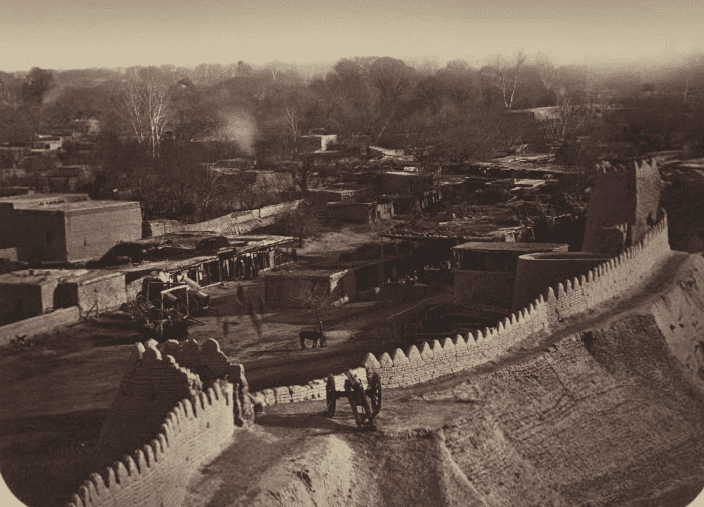
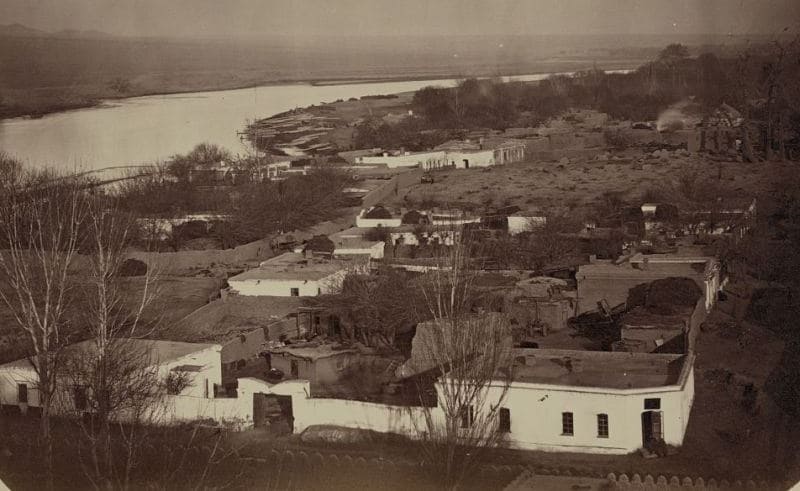
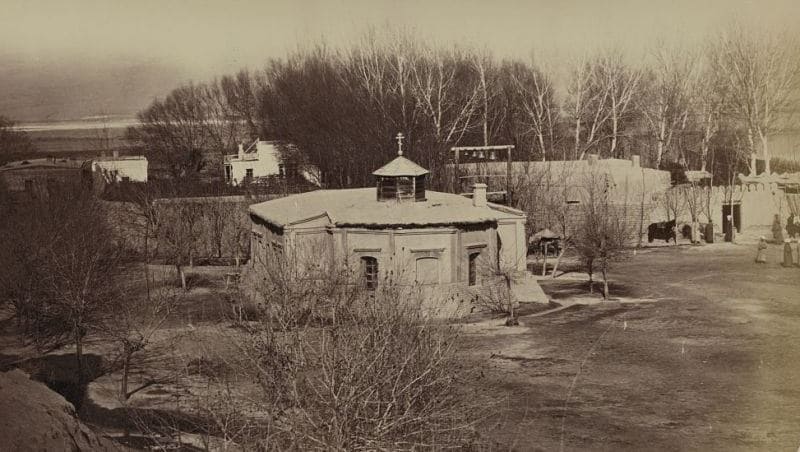
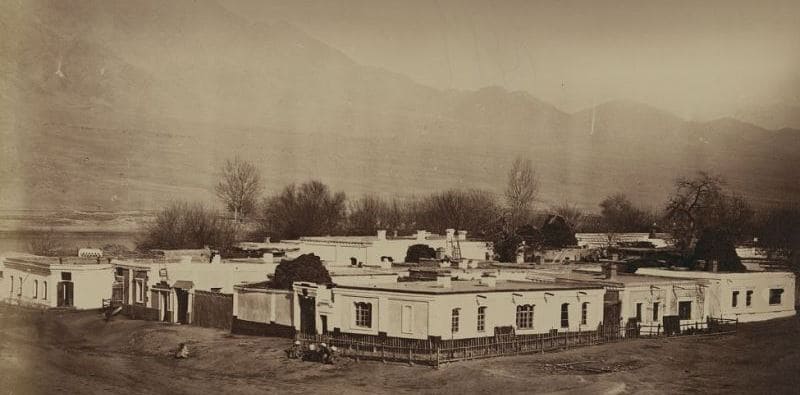
Authority:
Tourist Guide to Dushanbe Monuments. 2012.
Photos by:
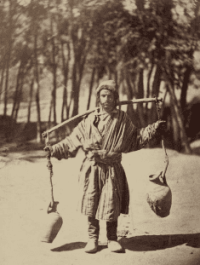
From the Turkestan album, general Konstantin Petrovich fon-Kaufman created on the order a background (1818 -882), the Russian Turkestan first the general-governor, consists of four parts in six volumes. Composers of the Turkestan album the Russian orientalist Kun Alexander Lyudvigovich a background (1818-1882) by means of N.V. Bogaevckiy.