





Вы здесь
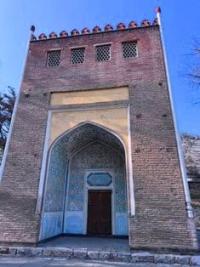
Asaf ibn Burkhiya Mausoleum.
Pilgrimage to religious monuments of Osh.
"He who has knowledge of the Book said: 'I will bring it to you in the twinkling of an eye.'"
Quran, Surah an-Naml, 40.
Excursion to of Asaf ibn Burkhiya Mausoleum.
A renowned Muslim pilgrimage site, Asaf ibn Burkhiya Mausoleum, located at an altitude of 1001 m. a. s. l., is situated at foot of southeastern part of Mount Sulaiman-Too, 190 meters southwest of Alymbek Datka Park, in close proximity (west) to Sulaiman-Too Museum in Osh.
Asaf ibn Burkhiya Mausoleum is a sacred site at foot of Mount Sulaiman-Too.
The Asaf ibn Burkhiya Mausoleum is one of the most significant sites of Muslim pilgrimage. This site has retained special spiritual significance for centuries and attracts believers, travelers, and researchers of Central Asian history.
Historical and Religious Significance of Asaf ibn Burhiya Mausoleum.
Asaf ibn Burhiya is a revered figure in the Islamic tradition. According to legend, he was a close confidant and vizier of the Prophet Suleiman (Solomon), possessing profound knowledge and wisdom. Religious texts ascribe special abilities to him, including knowledge of the "great name" of God, making him a man of exceptional spiritual status.
The association of his name with Osh and Mount Sulaiman-Too reflects the ancient tradition of sacralizing the landscape, when specific natural features became sites of remembrance and veneration of religious figures.
Physical and Geographical Location of Asaf ibn Burhiya Mausoleum.
The mausoleum is located in a unique natural setting – at the foot of Mount Sulaiman-Too, which towers over the city of Osh and is an important feature of the Fergana Valley's topography. The mountain itself is a rocky massif with steep slopes and caves, formed by long-term geological processes.
Its isolated location amidst the flat terrain lends it a special expressiveness and symbolic significance. The area is characterized by a warm continental climate, making it accessible to visitors almost year-round.
Architecture and appearance of Asaf ibn Burkhiya mausoleum.
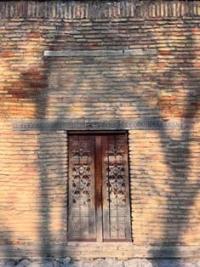
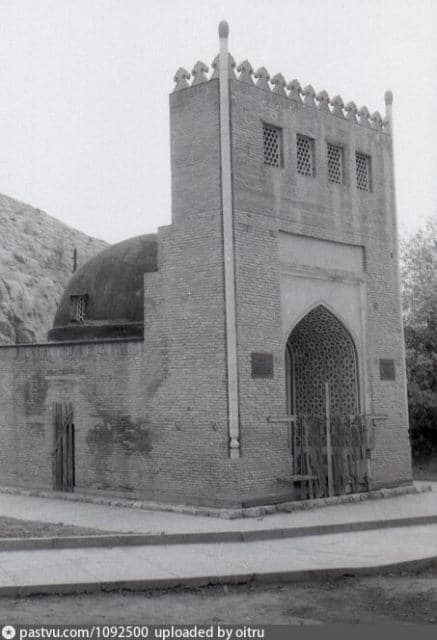
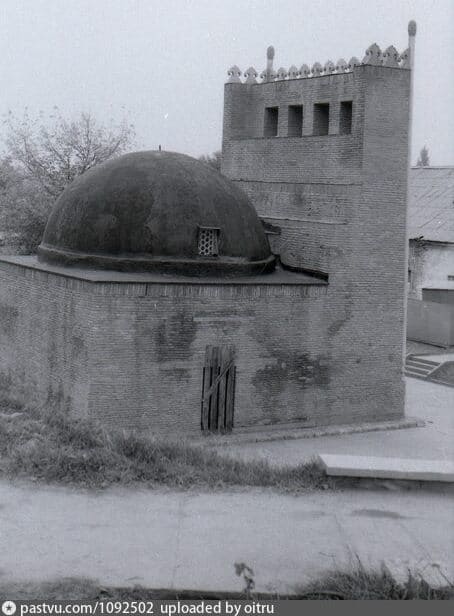
The modern mausoleum is a modest yet expressive structure, built in the traditions of Central Asian memorial architecture. Its forms are laconic and deliberately restrained, reflecting the spiritual purpose of the site. The structure has undergone numerous reconstructions and restorations, typical of such monuments, which retain their significance over the centuries.
Despite this, the site retains an atmosphere of antiquity and the continuity of tradition.
Legends and tales about Asaf ibn Burkhiya mausoleum.
Many legends are associated with the mausoleum. According to folk legend, the mausoleum is named after King Suleiman's mythical companion, Asaf ibn Burhiya, who bequeathed him a burial at the foot of this mountain after his death, which, according to legend, was fulfilled.
An architectural structure was erected over his grave, which over its long, centuries-long history has been repeatedly destroyed and rebuilt by successive generations. According to one legend, Asaf ibn Burhiya was buried at the foot of Suleiman-Too because this mountain was considered a place of particular sanctity, associated with the name of the Prophet Suleiman.
Another legend suggests that this location was not chosen by chance: it was believed to be the site of a special spiritual "axis" connecting heaven and earth. Therefore, burial at the foot of the mountain was perceived as a sign of high privilege. Some legends also associate this place with miracles of healing and the fulfillment of wishes, reinforcing its significance as a pilgrimage center.
History of Asaf ibn Burkhiya Mausoleum.
The Asaf ibn Burkhiya Mausoleum dates back to the XVIIth-XVIIIth centuries and was built in the traditions of the Fergana school of architecture and construction. Over its 200 years of existence, the building underwent numerous restorations and, until the Soviet period, was maintained by wealthy Muslims from Osh and Andijan.
Under the building's foundations, the remains of a baked brick structure, typical of the XIth-XIIth centuries, were discovered. According to researchers, the Asaf ibn Burkhiya Mausoleum was built in the XVIIth century from bricks from a destroyed building dating from the Xth-XIIth centuries, and acquired its current appearance in the XVIIIth century.
Detailed descriptions of the mausoleum found in authors from the XIXth and early XXth centuries emphasize the significance of this structure as one of the oldest architectural monuments in the city of Osh.
Authority:
Turgunbai Sadykov, Osh Regional Museum of Fine Arts.
Role of Asaf ibn Burkhiya Mausoleum in tourism and pilgrimage.
Today, the mausoleum is part of the Sulaiman-Too Mountain historical and cultural complex, a UNESCO World Heritage Site.
Visitors come here:
for prayer and spiritual solitude;
as part of pilgrimages to the region's holy sites;
for educational and sightseeing purposes.
The site's proximity to the city of Osh makes it easily accessible, and its developed infrastructure allows it to be included in tourist routes in southern Kyrgyzstan.
Significance of Asaf ibn Burkhiya Mausoleum in cultural landscape.
Asaf ibn Burkhiya Mausoleum is a striking example of how a natural site and spiritual tradition form a unified cultural space. Here, religious beliefs, historical memory, and landscape features intertwine. The mausoleum at the foot of Sulaiman-Too remains a place where one can sense the depth of centuries and the continuity of spiritual tradition.
This is not just a monument, but a living part of Central Asia's cultural heritage, continuing to attract people with its silence, meaning, and inner strength.
Geographical coordinates of Asaf ibn Burkhiya Mausoleum: N40°31'46 E72°47'31
Authority:
Alexander Petrov.
Turgunbai Sadykov, Osh Regional Museum of Fine Arts
Photos by:
https://www.facebook.com/oshksm/posts