




Вы здесь
History of Kazalinsk.
Ancient towns of Kyzylorda region.
“Under current circumstances, the Kazalinsk fort is sufficient to secure the left flank of the Aral fortification area and to control the fertile Syr valley as far as Uch-Urga and beyond. Therefore, constructing forts along the Syr above Tukach's grave is unnecessary. However, if the need arose, they could be occupied as forts.”
A. I. Maksheev. "Travels in Kyrgyz Steppes and Turkestan Region." 1896.
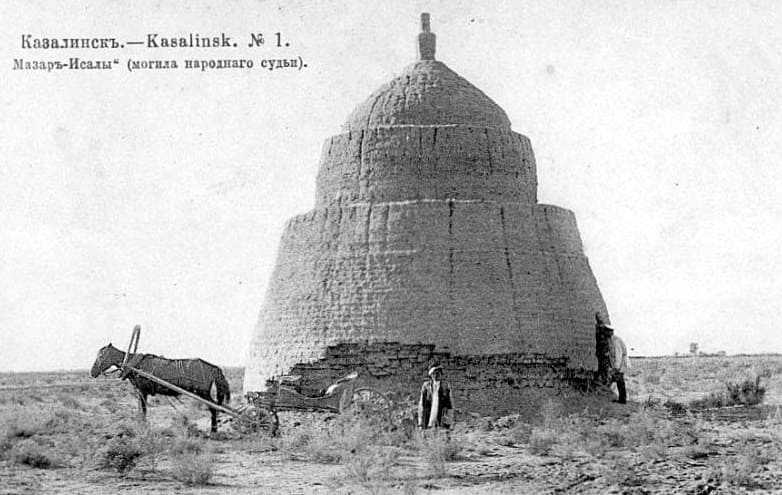
Visiting sights of Kazalinsk from late XIXth century.
First fortification named Kazalinsk was founded by Orenburg military governor Vladimir Obruchev in 1847; it is now city of Aralsk. Taras Shevchenko was exiled here for three years. It soon became clear that fort's location had been poorly chosen, off main trade route.
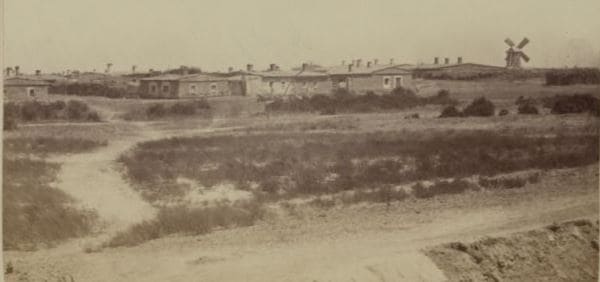
In 1851, 20 miles from the ruins of ancient Yangi-Kent, a new outpost of the Russian Empire was established – Fort No. 1, soon named Kazalinsk. Kazalinsk is named after the Kazakh word "Kazal," meaning "muzzle" or "top." "Kazalinsk is located at an altitude of 71 m. a. s. l., on the right bank of the Syr Darya River on the major caravan route between Khiva and Bukhara, Russia."
These lines are taken from Alexander Dobrosmyslov's book "Cities of the Syr Darya Region," published in 1912. In 1853, Fort No. 1 was built on the site of modern-day Kazalinsk. In 1855, all settlers from the Aral fortification were transferred here.
By 1858, after the suppression of Zhankozhi-batyr's rebellion, the fort was already home to 600 infantrymen, 300 Cossacks, and 85 artillerymen. In 1861, 347 settlers had settled at the fort.
Here's one piquant detail from documents from that time:
"Soldiers' wives sometimes sell bread and pies at the market, and often wine at home, although this is prohibited. For the most part, they are idle. Officials have difficulty finding laundresses for high wages, and they are unable to find female servants at all. Meanwhile, the lives of soldiers' families are not poor.
The lack of women inevitably leads them into temptations, and with their husbands' weak sense of honor, soldiers' wives find the means to live well without effort."
In 1858, the first school was founded in Kazalinsk, but overall, education in the city was poorly developed. In 1862, the fort was connected to Orenburg by a postal route. In 1863, a school for Kazakh children opened, initially with only six students.
In July 1867, the district town of Kazalinsk, part of the Syr Darya region of the Turkestan Governorate-General, appeared on the map. From that time until 1905, 13 people held the position of district governor in Kazalinsk. In 1879, a weather station opened in the city, where it was determined that the average annual temperature in the city was +8°C, with a high of +42.1°C, and a low of -40°C.
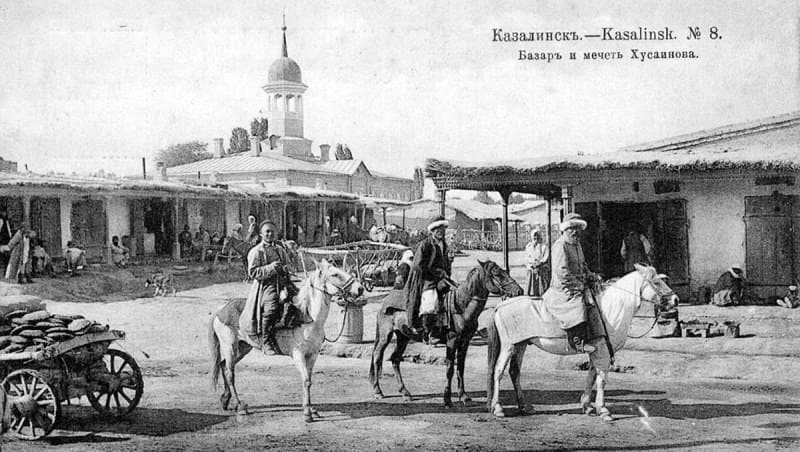
The first mosque in the city was built by the Bukharan merchant Alimbayev in 1872. Subsequent mosques were built by Tatars, Sarts, and Kazakhs. Most of these people were concerned solely with their own careers and did not know or care about the region.
There were, however, exceptions, such as Stepan Putintsev, mayor from 1892 to 1898. Under his leadership, the famous district garden was created in Kazalinsk. The garden was located practically on the banks of the Syr Darya River and was a favorite recreation spot for the townspeople.
Now, only a vast vacant lot remains. Only the stumps of once-enormous trees remain here and there. In 1884, evening classes for adults were opened. There were also other educational institutions in the town. And in 1900, the Kazalinsk Public Library, named after Rear Admiral Butakov, opened; we'll talk about him later.
In 1887, a police force was established in the town. By 1903, there were 19 police officers in the town, significantly fewer than today, despite the same population. Starting in 1868, Tatars began arriving in Kazalinsk, and despite discrimination by the colonial administration, they left a noticeable mark on the town.
Regional researchers note that it was they who carried religious books across the steppes. Book trade in the city originated from both Kazan and Bukhara. These books were subsequently hidden from the Soviet authorities, but some copies eventually made their way to the museum, where they remain untranslated; the museum lacks a specialist in Arabic script.
Ural Old Believer Cossacks were exiled to Kazalinsk, where they were said to have been "punished beyond measure" and periodically imprisoned in the city's prison-castle, the key to which is kept in the museum. You won't find so many medals on any bottle of champagne.
As for the Ural Cossacks themselves, they did not mix with the rest of the city's population and were considered "a sober and hard-working people." At the beginning of the last century, there were 2,000 of them in the city. Kazakhs also began settling in the city, and by the early XXth century, they already constituted more than half of the city's population.
This sets it apart from other cities in the south of the country, where Kazakhs were a minority at the time. Jews, sedentary Sarts, Karakalpaks, and Persians also settled here. According to the 1897 census, Kazalinsk had a population of 7,585.
By comparison, Perovsk, in Kyzylorda, had a population of 5,058, and Shymkent had a population of 11,907. By 1910, Kazalinsk's population had grown to 12,247, more than its current level. At the beginning of the 20th century, a water supply from the Syr Darya River was installed in the city.
Twenty-five kerosene-smoke lanterns lit the city streets. The magnificent buildings of the early 20th century make the station a fitting addition to any major city's platform. The station building bears the inscription "Kazal," but the town that grew up around the railway was called Novokazalinsk in 1903; today it bears the name Aiteke-bi.
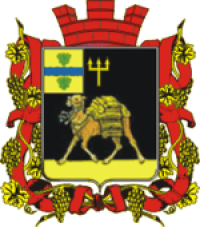
The population is approximately 30,000. There is a railcar repair plant here. In 1905, Kazalinsk already had streets with baked brick sidewalks, of which nothing remains. Even then, the city's cemeteries were "not sufficiently well maintained." In 1909, the Kazalinsk coat of arms was approved.
Here is its description:
"A natural, laden camel, surrounded by a golden trident at the top. In the free portion is the coat of arms of the Syr Darya region. The shield is surmounted by two golden grape vines connected by an Alexander ribbon."
Currently, the city has no coat of arms. Kazalinsk proper is located 10 km southwest of here and has a population of no more than 10,000, the same as a hundred years ago. When the prosperous city found itself off the railroad, it was abandoned.
Despite this, Kazalinsk merchants were always considered wealthy. The building, constructed in 1915, is in excellent condition. Inside, it is clean, with carpets and brightly painted wooden columns. After the revolution, a warehouse, a club, and a clinic were located here. Kazalinsk always thrived on trade.
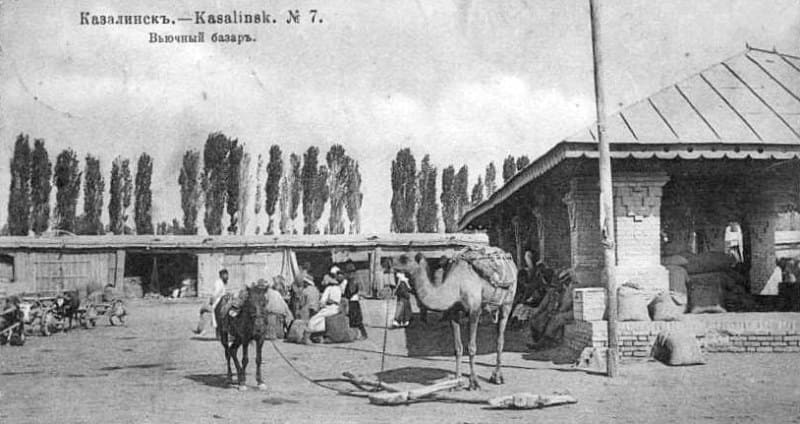
The scale of this trade is evidenced by the fact that over 20,000 sheep alone were exported from here to Orenburg annually. The merchant turnover in this area reached 2 million rubles annually. In addition to livestock, they traded in dishes, fabrics, and dried fruit.
English goods were also brought here. Kazalinsk merchants erected magnificent caravanserais in their hometown. One of them remains near the old mosque. This enormous building, easily large enough to house a modern supermarket, is completely abandoned; it lacks even a plaque designating it as an architectural monument.
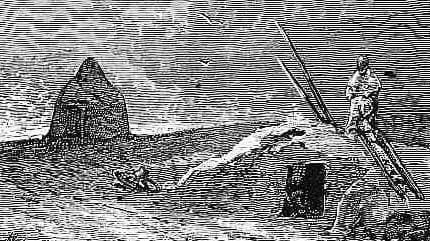
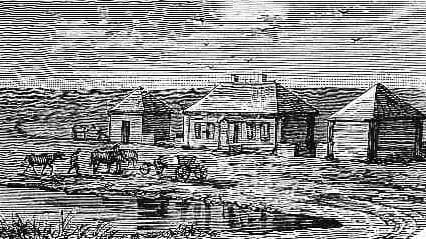
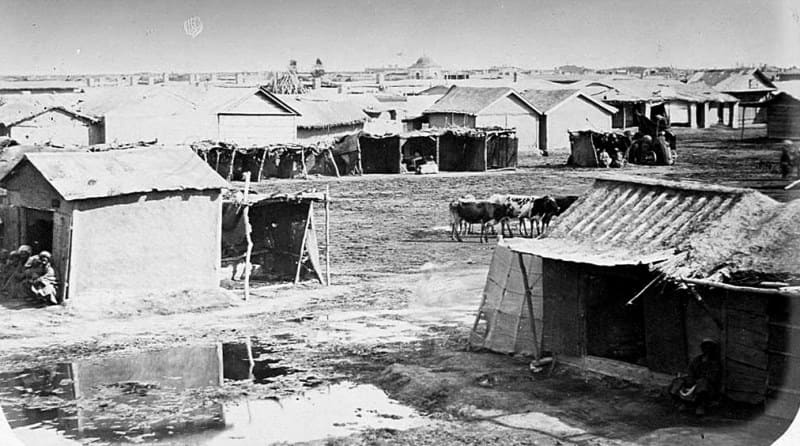
Nearby is another beautiful building – a former madrasah with a magnificent minaret. Today, it houses a sports school. But by the end of the 19th century, Kazalinsk was still a significant settlement for the area. The population of this district town was 7,600, huddled in 645 ramshackle, flat-roofed mud huts.
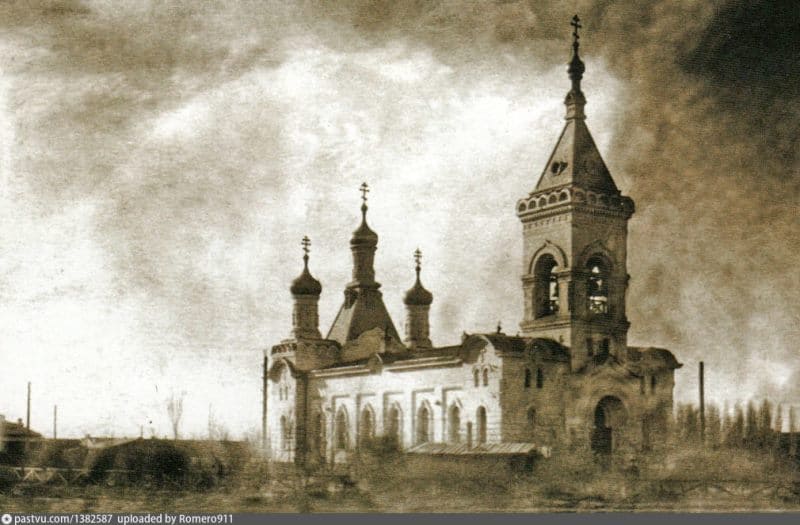
During the spring floods, the town was surrounded on all sides by water, which stagnated until summer, becoming a breeding ground for malaria-carrying mosquitoes. The town had one Orthodox church, several mosques, a town school with a vocational class, and a "Russian-Kyrgyz school."
The fate of Kazalinsk was finally sealed by the construction of the Orenburg-Tashkent railway, which ran 12 kilometers northeast of the town between 1900 and 1905. All cargo and trade were concentrated in the new railway settlement of Novo-Kazalinsk, depriving the town of any incentive to develop.
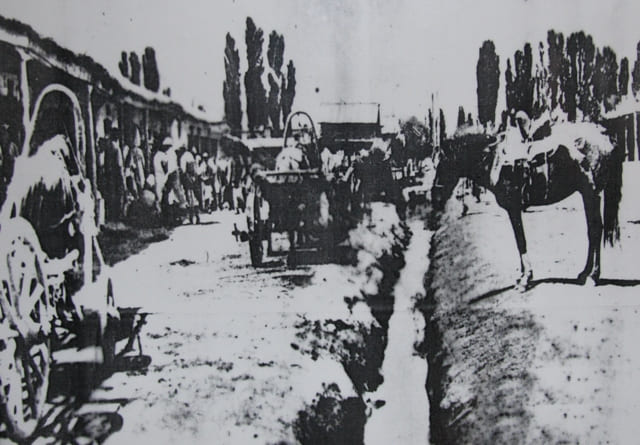
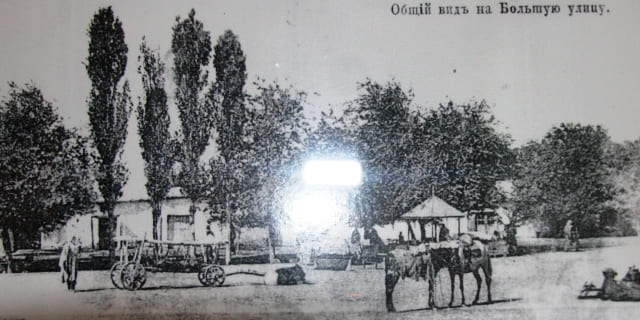
Today, all that remains of Kazalinsk's glorious past are old merchant mansions and red-brick shops on dusty streets lined with poplars and willows. In 1918, they paid the Bolsheviks 500,000 gold rubles in reparations without any problems. On the road, which stretches through the completely flat desert, we come across a memorial to one of the famous heroes of the Little Zhuz, Zhankozh Batyr.
This leader, already an old man, caused considerable trouble for the colonial administration, which in the late 1850s began to confiscate the most convenient lands from the local population. Every city begins with a museum. A neat old log building. Impeccably clean and a host of interesting exhibits...
Authority:
Alexey Goncharov. City of Shymkent. 2008.