




Вы здесь
Sary-Su Steppe.
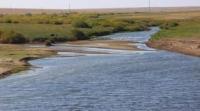
Zhetykonyr Sands in Sary-Suu Steppe.
"More than half of Kazakhstan's territory was desert and semi-desert steppe, including vast areas of sandy and clayey massifs, ill-suited for habitation. Among these, the largest were the Kyzylkum, Muyunkum, and Naryn-Kum massifs south of Lake Balkhash. Smaller sandy areas are found throughout the Caspian Lowland - on the Mangyshlak Peninsula and around the Aral Sea, along the Emba, Uila, and Syr Darya river valleys, etc. The entire steppe region up to the Zailiskiy and Dzungarian Alatau was occupied by the Sary-Ishikotrau sands."
S.Z. Zimanov. "Social System of Kazakhs in First Half of XIXth Century." 1958.
Baigul and Tokhta Mountains in Sary-Suu Steppe.
Upper reaches of Sarysu River basin are located in dry, sparsely populated Kazakh steppes. Sarysu is one of major waterways of central Kazakhstan and Kyzylorda region. It is formed by confluence of Zhaman-Sarysu and Zhaksy-Sarysu rivers.
Below the confluence of these rivers, the Sarysu borders the Betpak-Dala desert to the north and west. After the confluence with the Kingir River, the Sarysu changes direction and flows south and southwest. This powerful river, which once carried its waters to the Syr Darya, is now almost entirely overgrown with reeds.
Narrow, shallow ravines remain of its former wide channel, which are filled only in the spring by melting snow, forming a single stream. In summer, the river becomes shallow and disintegrates into isolated reaches. In its lower reaches, it splits into several branches, only one of which carries its waters to the small Lake Tele-Kol.
The banks of the Sarysu reach a height of 15-20 meters. Along them, gentle hills with bare rocky peaks covered with rubble and slopes overgrown with low grass. Many tributaries flow into the Sarysu. But even these only live in the spring, disintegrating into separate reaches in the summer.
The water in these reaches undergoes dramatic changes throughout the year. In the spring, it is fresh, but in the summer it becomes brackish and even salty. Many reaches gradually become overgrown. From their muddy bottom, densely intertwined stems of aquatic and marsh plants rise: urutz, pondweed, and the thin, thread-like Zanihelia.
The water's surface is dotted with large, round water lily leaves. Reed beds green on the marshy banks. Tall, slender stalks of cattail, crowned with thick ears, rise from the water. The narrow floodplains of the river reaches are rich with lye. Veronica, aster, yarrow, naima, geranium, and willow herb bloom here, and rose hips fill the air with a delicate aroma.
Their fruits are the only berries here. Fresh water, except in some reaches, is found in springs and wells. They are located 12-14 km apart and are visible from afar by the vibrant green reeds and grasses surrounding them. The wells are typically 2-3 meters deep; the water is located at a depth of half a meter. Kazakh wintering huts are located near the wells.
The expanses of the Sarysuy steppe are covered with dense grasses – typs, wormwood, and feather grass. In the lowlands with alkaline soil, where groundwater approaches the surface, tall chee grows, the stems of which are used by the Kazakhs to weave sturdy mats.
Tamarisk also blooms here, covered in small blue flowers. The Kazakhs use its roots as a tanning agent. Sparse clumps of caragana and meadowsweet bushes are scattered. The vegetation of the Sarysuy steppe serves as food for livestock.
In the future, the steppe will become a huge base for livestock farming. It will be able to supply Dzhezkazgan, Karaganda, and a number of other industrial enterprises with meat, wool, and dairy products. The steppe's fauna is unique. Butterflies and dragonflies, not distinguished by their varied colors, flutter over the meadows and river floodplains.
Small phalanges are sometimes found on the sandy banks. The steppe is teeming with grasshoppers and spiders. There are also poisonous black widow spiders. A camel dies from the bite of a tiny black widow, but sheep greedily eat these insects.
Field mice and lizards have adapted perfectly to the gray background of the steppe, sown with wormwood and kokpek. Well protected from the eyes of enemies by their protective coloring, they nimbly dart near their burrows in search of prey. Where the steppe grass is thicker and taller, bustards graze cautiously.
Golden eagles nest on secluded cliffs or hilltops. Kazakhs tame them to hunt hares, geese, bustards, and foxes. Occasionally, you can stumble upon a flock of bulduruks (birds resembling pigeons), with a distinctive A whistling noise rises when a person approaches.
The pools are home to waterfowl - ducks and geese - who nest in the coastal reeds. On scorching summer days, the steppe is unbearably hot; in the cold winter months, fierce winds rage across it, and snowstorms rage. Temperatures here reach 30°C and higher, while frosts reach -40°C.
The railway to Dzhezkazgan runs through the middle of the Sarysuy steppe, partly along the Sarysuy River.
Geographic coordinates of Sarysuy steppe: N47°32'29 E68°49'32
Authority:
"Nature of Kazakhstan in Essays and Pictures." N.N. Palgov. Publishing House of the Academy of Sciences of the Kazakh SSR. Alma-Ata. 1950.