




You are here
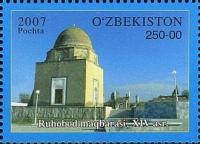
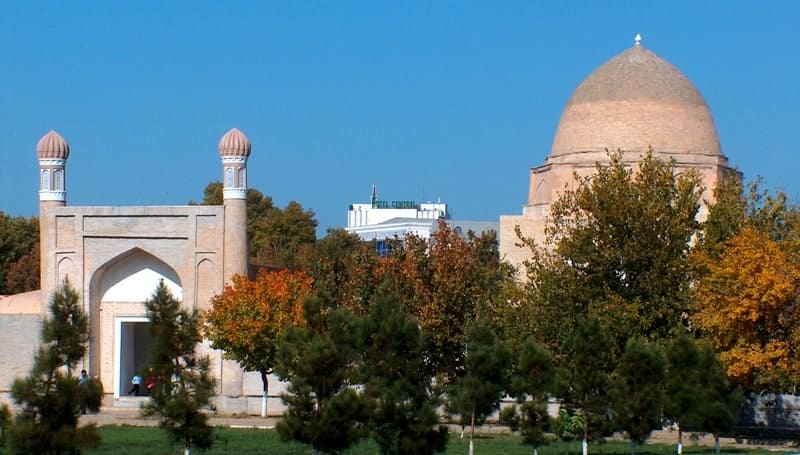
Rukhabad mausoleum.
Combined tours over countries of Central Asia.
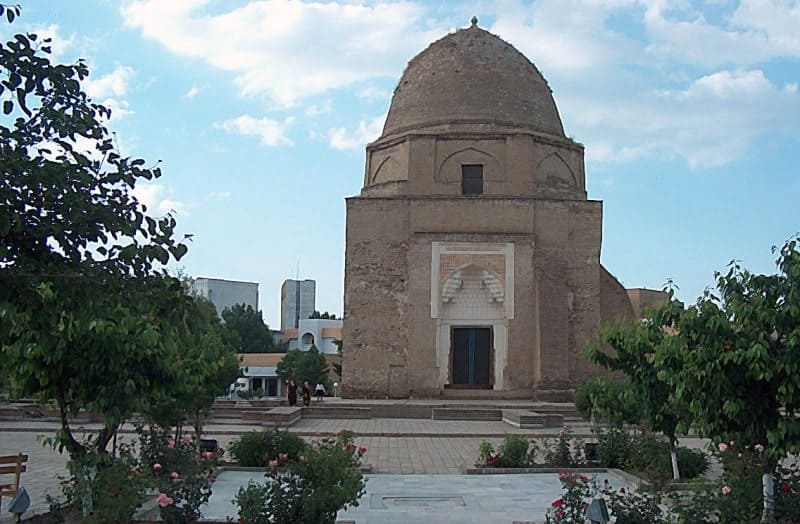
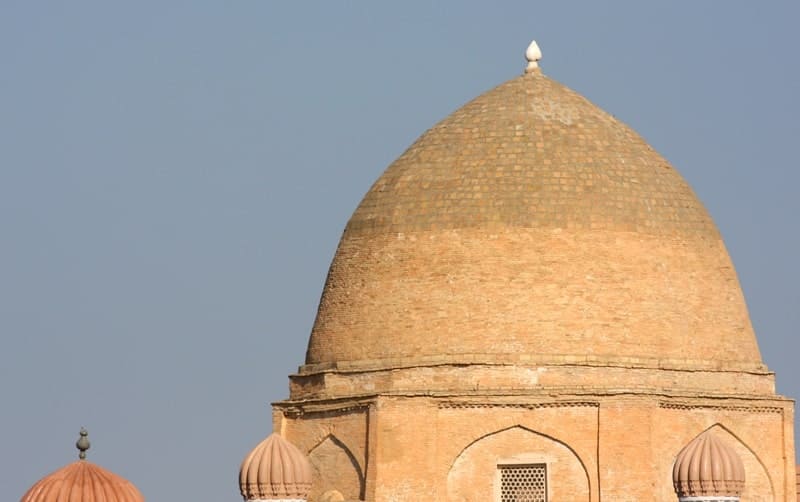
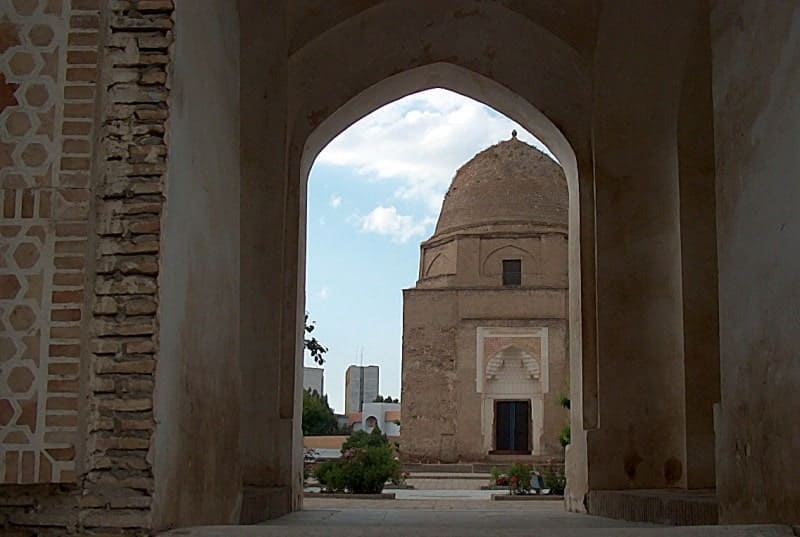
"The cold simplicity of its exterior and a certain heaviness are the main features of this structure. It appears unfinished. There is neither a drum nor an outer dome, which were intended but likely never existed. The building has three entrances: the southern one with an ancient door, carved, paneled, and depicting fish, but now blocked; the northern one, framed with plate-shaped tiles; and the western one, through which one now enters the interior."
V. L. Vyatkin. Rukhabad. "Antiquities of Samarkand." 1930.
Seven Wonders of architectural monuments of Uzbekistan.
Rukhabad Mausoleum (Uzbek: Ruhobod maqbarasi - Abode of the Spirit) is a XIVth-century memorial and religious structure. It is burial place of the Islamic preacher, theologian, and mystic scholar Sheikh Burhaneddin Klych Sagardzhi. Rukhabad Mausoleum, located at an altitude of 714 m. a. s. l., is located at 8 Kyzyl Yulduz Street, 281 meters east and slightly north of Amir Temur monument, 109 meters north of H.M. Shukrullaev House Museum, in western part of Shukrulla Park in Samarkand.
To the north of the Gur-i Emir mausoleum is a mazar built over the grave of the mystic Burhaneddin Sagardzhi, who died in the XIVth century. The exact date of construction of this building, known as Rukhabad ("Abode of the Spirit"), has not been established.
The mausoleum, known as Rukhabad ("abode of the soul"), is a centralized domed structure, likely built in 1380 for the sage and mystic Sheikh Burhaneddin Sagarji, a prominent Islamic figure who died in Beijing. He asked his son to have his body brought back to Samarkand and buried in the mazar (mausoleum) of another sage, Sheikh Basir.
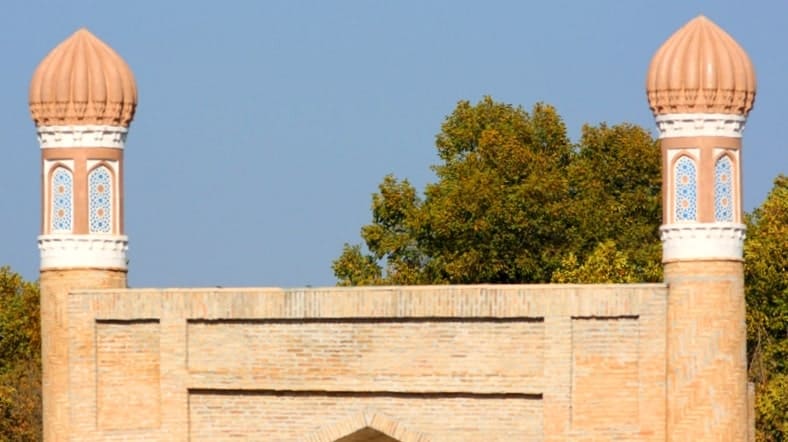
Tamerlane, who revered Sheikh Sagarji, subsequently erected a monumental structure on this site in the 1380s. The Rukhabad complex included a large courtyard surrounded by a covered arcade and a summer mosque. The entrance to the complex is marked by a gate with a pointed entrance arch (peshtak), flanked by two domed towers.
Based on the relief tile decoration around the bricked-up northern door, some researchers date this mazar to the second half of the 14th century. It is a monumental brick building with a single dome, featuring a centric composition: a cube, an octagon with windows on the main axes, and a sphero-conical dome.
The main façade is accented by arched entrances framed by carved glazed terracotta tiles. In 1952, ring braces were installed to strengthen the building, and the ceiling was repaired. Buried within are the sons of Sheikh Abu Sa'id, Shaikhzoda Isom ad-Din, and other members of the Sagardzhi family, including the "Chinese princess," Sheikh Sagardzhi's wife.
Abu Sa'id, Shaykhzoda Isom ad-Din, was (according to the Arab traveler Ibn Batuta) a Central Asian sheikh and the head of the Muslims of Beijing. When he died, his son moved him to Samarkand, and according to his will, his father was buried next to the tomb of the Samarkand sheikh Basir.
According to legend, a secret place containing seven hairs of the Prophet Muhammad is located under the dome of the mausoleum. Next to the mausoleum is a summer mosque, the design of which was influenced by East Turkestan or Chinese traditions.
Geographic coordinates of Rukhabad Mausoleum are: N39°39'03 E66°58'05
Authority:
Arapov A.V., A.G. Pugachenkova.
Mausoleum Rukhabad (“Abode of the Spirit”).
In the 1230s, the Arabian traveler Ibn Battuta acquainted with the Central Asian sheikh from "suhrawardiyyah", Burkhan ad-Din Sagardji in India. Once sheikh Burkhan ad-Din Sagardji propagated Islam in Eastern Turkistan. Later, in 1345 - 1346, Ibn Battuta again met the sheikh in China, in the capital of the Mongolian khan, Togon-Temur.
There, in Peking, sheikh Sagardji was recognized as "a chief of Muslims”. The sheikh died in China and his son Abu Sa’id transported the body to Samarkand and buried beside mazar of Nur ad-Din Basir. Abu Sa’id Sagardji had stayed in Samarkand, married the daughter of Samarkand sheikh al-islam and occupied a place among the most esteemed religious figures at Amir Temur's court.
Amir Temur caused to erect a mausoleum above the tomb of sheikh Burkhan ad-Din Sagardji. This is laconic brick one-dome structure, known as Rukhabad mausoleum – “House of Spirit”. The mausoleums of sheikh Nur ad-Din Basir, Rukhabad and Gur-Emir are located on the same axis, what emphasized spiritual affinity of the Temurids and highly respected Sufi sheikhs.
The front facade of Rukhabad is accented by arch entrances in a frame of carved enameled terracotta plates. Later, beside sheikh Burkhan ad-Din were buried his sons, sheikh Abu Sa’id and Shaikhzod Isom ad-Din. The legend says that the other members of Sagardji family, in particular, “Chinese princess”, a wife of sheikh Burkhan ad-Din are buried also in the mausoleum.
According to the legend, under the dome there is a copper box with seven hairs of Prophet Muhammad. Ruhabad mausoleum adjoins the summer mosque, which decoration bears traces of Eastern-Turkistan or Chinese traditions. The small minaret added the complex at the end the XIX - beginning of XX c.c.
Authority:
Alexey Arapov. Samarkand. Masterpieces of Central Asia. Tashkent, San’at. 2004.
Photos by:
Alexander Petrov, Sergey Mikhalkov.