




You are here
Nature of “Burabay” National Park.
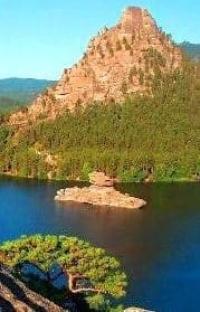
Tours by nature Burabay.
"The mountains preserve their silence,
and the lakes their secrets.
And only the traveler who reaches the summit
will hear the vital force of nature breathing in the depths of the water."
Tourist Routes in Burabay natural park.
Nature of "Burabay" National Park is a landscape oasis in northern Kazakhstan. Burabay (Borovoye), now renamed Burabay lies over 200 kilometres to the northeast of Astana and almost 100 kilometres to the south of Kokshetau - which by Kazakh standards makes it very accessible.
It's a name that is treasured by all Kazakhs, referring not only to the famous lake that lies in the middle of the mountains, but to the whole Burabay - Kokshetau National Park. Only 630 square kilometres in size, it is one of the country's smaller nature reserves.
Burabay is dominated by its clear, spring-fed lakes, and the deciduous ash and birch forests that surround them (the Russian name Borovoye signifies a landscape covered by Bor; or "little forest"). The park owes its clean, fresh air to these woodland trees - which in turn has granted it a reputation as a health resort, together with its mild climate and soothing scenery.
Small guesthouses, hotels and holiday camps are scattered everywhere, but in spite of this there is plenty of pristine landscape still remaining, and even during the high season between June and September there are plenty of places to find peace and solitude.
Is situated in the territory of the Shuchinsky district of Kokshetau oblast on the eastern foothills of Kokshe Tau mountain 947 m. a. s. l. The territory is 10,5sqkm, the length is 4,5km, the width is 3,9km; average depth is 4,5m, and the max depth is 7m.
The shore line is 13,6km, the area of the water is 164sqkm. The hollow of the lake is almost round, the bottom is level with bias to the north-west; the south shores are granite, and the east shores are sandy. The water in the lake is soft, limpid, and one can see the deepest bottom of the lake.
Burabay Lake is separated with the ranges from the closest lakes (Big and Small Chebiache, Shuche, kotyrkol, Zhukei, etc.). Not so big island “Zhumbaktas’ is situated in the north-western part of the lake and at a height of 20m above water. The cliffs and capes of the north-western and southern coasts (Kyzyltas, Gorky, etc.) create the unique landscape.
The coast is overgrown with pine and birch forest. The combination of mountains, pine forest and the lakes makes a special climate conditions in the natural boundary. The climate kumys medicinal health resort complexes (sanatorium “Borovoye”, “Okzhetpes”; rest house “Blue Gulf”, etc.) are one of the best in the country and built on the eastern coast between Sarybulak and Gromotukha Rivers.
There are medicinal mud and mineral springs. The beauty of the nature of Burabay is sung in Seifulin’s poem “Kokshetau” and in Mukanov’s novel “Botagoz”. "Burabay" National Park (Russian: Borovoe) is one of the most picturesque natural regions of Northern Kazakhstan.
It is located in the Akmola region, within the Kokshetau Upland, forming its unique orographic and biogeographic core. The park is renowned for its contrasting nature: amidst the steppe expanses, a complex system of mountains, lakes, pine forests, rock formations, and rare ecosystems suddenly emerges, significantly different from the surrounding landscape.
Geographical location and general characteristics of “Burabay” National Park.
The national park is located approximately 224 kilometers northwest of Astana and covers an area of over 130,000 hectares.
“Burabay” Natural Arch is home to:
- granite mountains with elevations up to 947 meters – Mount Kokshe Tau (Sinyukha),
- 14 large and dozens of small lakes (Burabay, Shchuchye, Big and Small Chebachye, Katyrkol, etc.),
- pine and mixed forests,
- rolling steppe areas (Kazakh Uplands).
This unique natural system forms a unique "northern oasis" amidst the arid Kazakh steppes.
Geological structure and relief of “Burabay” Park.
Kokshe Tau Mountains are the remains of ancient mountain systems, dating back to the Paleozoic basement of the Kazakhstan Shield. Their age is estimated at 300 - 400 million years. The park's geological structure is based on ancient, Middle Paleozoic igneous rocks.
Main Material:
The predominant rocks are granites. They make up the bulk of the Burabay mountain range.
Intrusive Massifs:
The central part of the park is located within the Borovsky granite massif, which formed as an intrusion - the penetration of magma into the upper layers of the earth's crust.
Mineralogical Diversity:
In addition to granites, the region contains clay-siliceous schists, as well as semi-precious and ornamental stones such as chrysoprase, chalcedony, jasper, serpentine, and multicolored ophiocalcites, testifying to the complex geological past of the area.
Quaternary deposits:
The youngest (Cenozoic) formations are represented by loose Quaternary deposits: sand, gravel, loam, and lacustrine sediments that fill depressions between hills and lake basins. The thickness of these layers can reach 20 - 40 meters. The main landforms of “Burabay” Park are:
- granite and syenite massifs
- rocks have bizarre shapes due to prolonged weathering,
- buttes, boulders, "mushrooms," towers, and natural amphitheaters are formed.
The topography of “Burabay” Park is called a melkosopochny or peneplain, meaning "almost plain," and consists of islands of low mountains and hills, including sopka (fells), surrounded by steppe.
Origin of the topography:
The modern landscape was formed as a result of long-term weathering and denudation processes - the destruction and removal of rock from once high mountains. Wind, water, and temperature fluctuations have eroded the solid granite massifs, creating the bizarre shapes of cliffs and buttes.
Main landforms of “Burabay” Park.
Low-mountain topography:
Characterized by low mountains with steep slopes and rocky peaks. The highest point is Mount Kokshe Tau (Sinyukha), 947 m. a. s. l.
Weathering remnants:
The park's hallmarks are unique rock formations such as Mount Zhumbaktas and Mount Okzhetpes, which acquired their unusual shapes through the selective erosion of granite.
Rugged topography:
Elongated ridges 5-20 meters high with domed, smooth peaks are present.
Lake basins:
Many of the park's lakes (Aulie Kol, Shchuchye, Big and Small Chebachye, etc.) are of tectonic origin and are located in basins formed in ring fault zones, which is also related to the geological structure of the massif. It is in these basins that the lakes formed – old erosional-tectonic basins filled with fresh water.
Altitude range:
Altitudes within the park range from lake level (for example, Lake Big Chebachye, located at 301.6 m. a. s. l.) to Kokshe Tau Peak, at 947 meters above sea level. Thus, the uniqueness of Burabay's landscapes is the result of the interaction of an ancient magmatic base and millennia of exposure to the elements, which created this unique "island" of mountains and forests in the heart of the steppe.
Particularly famous in “Burabay” Nature Park are:
- Okzhetpes - a symbolic rock associated with a famous legend.
- Zhumbaktas - a puzzle rock that changes shape depending on the viewing angle.
- Kokshe Tau, Bolashak, and Kotyrtas Mountains.
- Tectonic basins of “Burabay” Park.
Climate of “Burabay” Nature Park.
The climate in “Burabay” National Park is temperate continental with features of a special A microclimate formed by mountains, forests, and lakes. This means that all four seasons are present here, with hot summers and cold winters. A distinctive feature is the clean air, infused with the scent of pine needles and saturated with saltwater vapor, which has a healing effect.
Continental climate of “Burabay” Park:
Due to its location in Northern Kazakhstan, with distinct annual seasons.
Microclimate of “Burabay” Park:
Mountain ranges, pine forests, and lakes create unique conditions.
Health-improving effect:
Clean air with the aroma of pine forests and the therapeutic vapors from the lakes make the park's atmosphere beneficial for health.
Key climate features in “Burabay” National Park:
- Winters are cold, with average temperatures of –15 to –18°C.
- Summers are moderately warm, ranging from +20 to +25°C.
- Precipitation is higher than in the steppe, 300 to 400 mm per year.
- Forests create a microclimate, with cooler summers and warmer winters.
Lakes play an important role in climate regulation, humidifying the air and creating favorable conditions for diverse flora and fauna.
Hydrology of “Burabay” Lake Country.
The lakes of “Burabay” are among the region's key natural treasures: Burabay (Aulie Kol), the largest lake in the park, is known for its clear water; Shchuchye, Aina Kol (Big Chebachye), considered the largest and cleanest lake in Kazakhstan and a popular fishing spot; Shabakkol (Maloe Chebachye, smaller than Bolshoe Chebachye); Shortan Kol, Shabakkol; Katyrkol, a significant lake in the park; Akbalyk; Serebryanoye, a lake renowned for its healing properties due to the mineral composition of its water; and Karasu (Maloe Karasye).
The lakes vary in origin and mineralization. Their water is generally clear, soft, and oxygen-rich.
Flora of “Burabay” Nature Park.
The park's flora includes over 800 plant species, including:
Main vegetation zones,
Boreal pine forests.
The main tree species in “Burabay” Park is Scots pine (Pinus sylvestris). The forests are drought-resistant and have formed unique sandy-granite soils. The park is home to birch groves and mixed forests: silver birch (Betula pendula), aspen, or European aspen, or trembling poplar (Populus tremula), and rowan (Sorbus).
Steppe communities of the Burabay Park: feather grass (Stipa): fescue or Wallis fescue (Festuca valesiaca) - a perennial herbaceous pasture and forage plant, one of the common steppe plants: wormwood (Artemísia) - a large genus of herbaceous or subshrub plants of the Asteraceae family.
"Burabay" Park is home to rare plants listed in Red Book of Kazakhstan:
Lady's slipper, or common lady's slipper (Cypripedium calceolus):
Adonis vernalis, or adonis, or spring adonis (Adōnis vernālis) is a perennial herbaceous plant, a species of the genus Adonis in the Ranunculaceae family: Slipper large-flowered, a perennial herbaceous plant, a species of the genus Cypripedium in the orchid family (Orchidaceae):
Onosma simplicissima is a species of flowering plant in the genus Onosma in the Boraginaceae family: Pulsatilla patens, also known as "snowdrop," usually blooms immediately after the snow melts:
White water lily (Nymphaea) Alba), is designed to keep the water clean and serves as a habitat for many aquatic organisms.
Fauna of “Burabay” Nature Park.
“Burabay” fauna is diverse thanks to combination of forests, mountains, and lakes.
Mammals in “Burabay” Park:
Moose (Alces alces), the largest mammal of the deer family, inhabits the forested area of Burabay;
Siberian roe deer (Capreolus pygargus), a graceful, elegant even-toed ungulate of the deer family, common throughout the vast territories of “Burabay” Park;
Wild boar (Sus scrofa), a large omnivorous even-toed ungulate of the pig family, the wild ancestor of the domestic pig;
Wolf, gray wolf, or common wolf (Canis lupus), a carnivorous mammal of the canine family, the direct ancestor of the domestic dog and one of the most common land predators; Lynx (very rare) (Lynx lynx), a carnivorous mammal of the feline family, known for its distinctive appearance and secretive lifestyle;
Badger (Meles meles, or common badger), the badger is a predatory mammal from the mustelid family, known for its peaceful nature, exceptional cleanliness and ability to dig complex, multi-level burrows:
The squirrel, or veksha, or common squirrel (Sciurus vulgaris), is an agile, small rodent of the squirrel family, widespread in the forests of “Burabay” and one of the most recognizable inhabitants of Kazakhstan's parks and reserves:
Reindeer (restored populations) (Rangifer tarandus), a unique even-toed ungulate mammal of the deer family, plays a fundamental role in the Burabay ecosystem. It is the only representative of its genus and the only deer species in which both males and females have antlers.
Birds of “Burabay” Nature Park.
“Burabay” Nature Park boasts approximately 200 bird species, including:
Osprey (Pandion haliaetus), a bird of prey and the only member of the osprey family, specializing almost exclusively in hunting fish;
the common crane (Grus grus), a large, majestic migratory bird of the crane family, which is a symbol of fidelity and love in many cultures, as pairs remain for life;
the white-tailed eagle (Haliaeetus albicilla), one of the largest and most majestic birds of prey in Burabay Park, a member of the accipitridae family;
the eagle owl (Bubo bubo, or great owl), the largest and most powerful bird of prey from the owl family, known as the "night master of the forest";
the black grouse (Lyrurus tetrix), a large bird of the family A pheasant, a member of the order Galliformes, inhabiting the forest and forest-steppe zones of Burabay National Park. Distinguishing features of this species include striking sexual dimorphism (the difference between males and females) and a unique mating behavior called lekking.
Fishes of “Burabay” National Park.
The fish fauna of the reservoirs of “Burabay” State National Park (including lakes Burabay, Shchuchye, Big Chebachye, and Small Chebachye) is quite diverse and includes both native species and fish introduced by humans.
Park's reservoirs are distinguished by their exceptional purity and transparency.
Characteristics of main fish species inhabiting “Burabay” Park.
Native (local) fish species that historically inhabitedlakes of “Burabay” Park.
Perca fluviatilis (common perch) is a widespread predator with characteristic dark stripes on its sides and red lower fins. It is found throughout the Burabay lakes, especially in areas with submerged snags and rocks. It is an important target for recreational fishing and also a natural regulator of the populations of other fish.
The common pike (Esox lucius) is a large predator with an elongated body and a characteristic "duck-like" mouth. It prefers thickets of aquatic vegetation and reeds. It can reach impressive sizes. It is a key predator in the lake ecosystem and a popular target for trophy fishing.
The Siberian roach (Rutilus rutilus) is a small schooling fish from the carp family. It has silvery scales and orange eyes. It is the primary food source for predatory fish. Widely distributed, it forms the basis of the diet of many predators in the” Burabay” Park.
Tench (Tinca tinca) is a bottom-dwelling fish with a thick body, small scales, and a greenish-golden coloration. It prefers reed beds and still waters. It is prized for its tasty meat and is often caught by fishermen.
Golden crucian carp (Carassius gibelio) is a species tolerant of low oxygen levels and capable of surviving in challenging conditions. It has a round, silvery body and is often found in shallower, more vegetated waters.
Introduced fish species in “Burabay” National Park.
These species were introduced and successfully acclimatized to the waters of “Burabay” National Park to enrich the fish fauna and develop fisheries.
Carp (Cyprinus carpio) is a large, powerful fish of the carp family. It is omnivorous, grows quickly, and can reach large sizes. Prefers warm water and weedy bottoms. A popular target for sport and recreational fishermen, prized for its size and flavor.
The pike-perch (Sander lucioperca), a large predator, was introduced to the lakes where it has successfully established itself. It has an elongated body and large teeth. It can reach trophy sizes (up to 5-7 kilograms), making it one of the most coveted trophies for anglers.
Whitefish, peled, vendace, and vendace (various species of the genus Coregonus) belong to the salmon family and are coldwater fish. They were introduced to the deep, clear lakes of Shchuchye and Bolshoye Chebachye, where they found suitable habitats. They are highly prized for their tender and fatty meat and are known as "Borovsk herring."
In addition to fish, the park's lakes are also home to crayfish (Astacus astacus), demonstrating the high purity and ecology of the local waters. Recreational fishing in the park is permitted with a special permit.
Natural Attractions of “Burabay” Park
Okzhetpes Rock, Pearl of Burabay, and Its Ancient Legend.
Okzhetpes Rock (translated from Kazakh as "the arrow won't reach," or literally "not reachable with an arrow") is one of the most famous and picturesque natural landmarks of the “Burabay” State National Nature Park. It is located in the Burabay District in the northern Akmola Region, towering over the surface of Lake Aulie Kol (Burabay).
Okzhetpes Rock is a solitary rock approximately 300 meters above the lake, with a unique, jagged shape. Its outline resembles a sinking ship, a giant pyramid, or, according to some, a recumbent elephant. It is composed of granite covered with lichen patches, giving it a unique appearance.
Okzhetpes Rock is an important symbol and calling card of Burabay, attracting tourists with its beauty and the poetic legends associated with it.
Legend of Okzhetpes Rock.
There are several variations of the legend, but the basic storyline tells of valor, love, and a tragic fate. Long ago, when the Kazakh steppes suffered from raids by invaders, there lived a brave and powerful batyr named Ablai Khan. In one of the fierce battles, the Kazakh warriors were victorious, capturing many enemies and seizing rich booty.
Among the trophies was an incredibly beautiful slave girl named Bayan-Sulu.
She was so beautiful that the hearts of all the warriors, including the Khan himself, were filled with passion for her. The girl, however, was proud and refused to be taken by any of her captors.
To avoid humiliation and a choice between the men who desired her, she set a condition:
- "I will marry the one who can shoot a bow so far that the arrow reaches the summit of that lonely, high cliff."
The task seemed simple, for among the batyrs were skilled marksmen. One after another, Ablai Khan's warriors drew their powerful bows. However, no matter how hard the most accurate and powerful of them tried, the arrows, arcing through the air, fell powerlessly, not even reaching the center of the inaccessible cliff.
It was as if nature itself or the mountain spirits, the aruakhs, protected the summit. This is why this cliff was nicknamed Okzhetpes - "the arrow will not reach."
This legend about Okzhetpes cliff has an ending:
No one was able to fulfill the proud girl's condition. Realizing she was not destined to find freedom and escape the unenviable fate of slavery, Bayan-Sulu made a tragic decision. She threw herself from the top of this very cliff into the waters of Lake Aulie Kol, choosing death over captivity and servitude.
Local residents and elders say that Okzhetpes Rock has forever remained a silent witness to this story of the girl's freedom-loving spirit, and the area around it preserves the memory of those distant times.
Tourist significance of Okzhetpes Rock.
Today, Okzhetpes Rock is not just a beautiful natural landmark but also a place of power, steeped in romance and ancient history. Tourists flock to the observation decks to admire the views of the lake and mountains and to experience a legend passed down from generation to generation. It is the park's symbol and considered one of the most photographed sites.
Zhumbaktas – Sphinx's Head and Mystery Stone of Blue Bay in “Burabay” National Park.
Zhumbaktas Rock (Kazakh for "mystery stone") is perhaps the most recognizable and legendary symbol of the “Burabay” State National Park. This solitary 18-meter remnant, rising in the middle of the crystal-clear Lake Aulie Kol (Burabay), amazes with its mystical ability to change shape depending on the viewing angle.
Physical and geographical description of Zhumbaktas Rock in “Burabay” Park.
Zhumbaktas Rock is located in the Blue Bay of Lake Burabay, 3.7 kilometers east of the village of Borovoe. Lake Burabay is part of the unique Shchuchinsk-Borovskoye resort region, often called the pearl of the Kazakh Uplands due to its combination of mountains, lakes, and coniferous forests.
Geological origin of Zhumbaktas Rock in “Burabay” Park.
“Burabay's” landscapes were formed by ancient geological processes and subsequent climatic influences. The cliffs and mountains here are composed predominantly of igneous rocks such as granite. The bizarre shapes, including Zhumbaktas, are the result of prolonged weathering (erosion) of once solid granite massifs.
Wind, water, and temperature fluctuations have eroded and worn away the rocks for millennia, giving the outlier its current unique appearance.
Optical illusion of Zhumbaktas Rock in “Burabay” Park.
The main physical feature of Zhumbaktas is its shape, which is perceived differently depending on the angle:
From one shore, the rock appears as a lonely boat floating on the lake. When viewed from a different angle, it transforms into the head of a girl with long, flowing hair. If you travel further, you'll see a hunched old woman. This natural optical illusion gives the rock its name – "Mystery”.
Legends about Zhumbaktas Rock in “Burabay” Park.
Like many picturesque places in Kazakhstan, Zhumbaktas Rock is steeped in a touching folk legend, which gives it a special romantic aura.
Legend of Lovers and Zhumbaktas Rock.
In ancient times, a poor but talented horseman-singer lived in these parts. He fell in love with the beautiful daughter of a wealthy local rich man. Knowing that their arrogant father would never consent to their marriage to a poor man, the lovers decided to elope.
They found refuge in a picturesque spot on the shores of the Blue Bay. The horseman built a boat out of pine, which they often rowed out into the middle of the lake to enjoy the solitude and sing. However, their happiness was short-lived. The girl's brothers, sent by the rich man to search for them, tracked the fugitives.
One day, when the boat sailed too close to the shore, a well-aimed arrow, fired by one of the brothers, pierced the young man's heart. In inconsolable grief, the girl turned to heaven, asking the Almighty to perpetuate their love and deliver them from their pursuers.
Allah, seeing her sincere despair, turned the girl and her lover's boat into stone. Thus, Zhumbaktas appeared in the middle of the bay - an eternal monument to tragic love.
Tourist information for visiting Zhumbaktas Rock in “Burabay” Park.
Zhumbaktas Rock is a must-see for any tourist visiting the Burabay resort.
How to get to Zhumbaktas Rock:
The rock is located within walking distance of the coastline, where numerous.
There are sanatoriums and hotels, including the Zhumbaktas Hotel of the same name. Burabay village can be reached by car or bus from major Kazakhstan cities such as Astana or Almaty.
What to see and do near Zhumbaktas Rock?
Photographing Zhumbaktas Rock:
Zhumbaktas Rock is an ideal subject for landscape photography. Tourists strive to capture its changing appearance from every angle.
Boat excursions on Lake Burabay:
The most popular way to see Zhumbaktas Rock from different angles is to rent a boat, catamaran, or join an organized boat tour along the Blue Bay. Guides will be sure to tell you the legend behind the rock.
Regulations when visiting Zhumbaktas Rock:
It is important to remember that climbing Zhumbaktas Rock is strictly prohibited. This is not only dangerous to life and health, but also a violation of the national park's environmental protection regulations. Fines are imposed for violators. Zhumbaktas remains not only a geological wonder but also a living testimony to Kazakhstan's rich cultural heritage, symbolizing the eternal mystery of nature and the power of human emotions.
Mount Kokshe Tau (Sinyukha) is peak of Sinegorye Mountains in “Burabay” Nature Park.
Mount Kokshe Tau, majestically towering over the landscapes of the “Burabay” National Park, is the highest point in the entire Burabay resort region. Its name, translated from Kazakh as "Blue Mountain" (from "Kokshe" - blue and "tau" - mountain), accurately reflects its appearance: thanks to the dense forests and clouds that often envelop the summit, it appears bluish from afar.
Kokshe Tau is not just a geographical feature, but also the heart of the region, a focal point of legends, and a key tourist attraction.
Physical and geographical description of Mount Kokshe Tau in “Burabay” National Park.
Mount Kokshe Tau is located in the northern part of the Kazakh Uplands (Saryarka), within the “Burabay” State National Nature Park.
Geology and topography of Mount Kokshe Tau in “Burabay” National Park.
The mountain reaches 947 meters above sea level. It is the dominant peak in the region, with a relative elevation of approximately 640 meters above the nearby Lake Aina Kol. The mountain is composed of ancient igneous rocks, primarily granite, which have undergone intense weathering and erosion over millions of years.
This has created a unique rocky topography with a jumble of boulders at the summit and steep, precipitous slopes. The mountain's slopes are asymmetrical: the western slopes are gentler, while the eastern slopes are steep and forested, creating a unique microclimate in the area.
Flora and Fauna of Mount Kokshe Tau in “Burabay” Park.
The slopes of Kokshetau are covered in dense coniferous forests, primarily pine. The park is home to a rich diversity of plants (over 750 species), many of which are listed in the Red Book of Kazakhstan, such as the lady's slipper and the Maryin-root peony.
The forests and mountain slopes are home to numerous animal species, including deer, elk, roe deer, wild boar, foxes, and badgers, significantly distinguishing the park's fauna from the surrounding steppe zone.
Legend and Mythology of Mount Kokshe-Tau in “Burabay” Park.
The mountain's majestic appearance and dominant position have inspired many legends in Kazakh folklore.
Legend of Bura and Sinegorye in “Burabay” Nature Park.
One of the region's central legends concerns a magical white camel named Bura. He was the protector of the local lands. He warned residents of approaching enemies with a loud cry. One day, while blocking the path of enemy invaders, the prophetic camel Bura transformed into the Burabay Mountains (meaning "camel mountains"), and the highest and bluest of the peaks is Kokshe Tau.
This legend emphasizes the mountain's sacred significance as a place of power and protection for the people.
"Ship" on summit of Kokshe Tau in “Burabay” Park.
There is also a geological explanation and mythological interpretation of the characteristic rock formations on the summit of Kokshe Tau. At the very summit, a silhouette resembling a "steamboat" (Keme) is clearly visible. Below the slope is a flat, 60-meter platform, popularly known as the "devil's coil," which, according to geologists, was formed by the collapse of a huge section of the cliff.
Near Kokshe Tau are three separate hills known as the "Three Sisters" ("Ush Dingek"), which are also the subject of legends telling of the heroic sisters who fought the enemy alongside the batyr Okzhetpes.
Tourist information for visiting Mount Kokshe Tau in “Burabay” Park.
Mount Kokshetau is a magnet for active tourists and nature lovers.
Climbing and routes on Mount Kokshe Tau:
Climbing Kokshetau is a popular route, but it requires some physical fitness.
Organized tours to Mount Kokshe Tau:
Numerous local tour operators offer guided hikes to the summit.
Routes to Mount Kokshe Tau:
There are simple sports and recreational hikes at an altitude of approximately 600 meters above sea level with beautiful panoramic views, as well as more challenging sections.
Rules:
Climbing the mountain is permitted, but it is important to observe safety and environmental regulations: do not leave litter, follow marked trails, and respect the park's protected status.
What to expect at summit of Kokshe Tau:
From the summit of Kokshe Tau, a breathtaking panorama of the entire Burabay region opens up: endless steppe surrounded by a ring of blue lakes (including Aulie Kol and Big Chebachye), and bizarre mountain formations. In clear weather, visibility extends for many kilometers, allowing you to fully appreciate the unique combination of landscapes of the Kazakh Uplands (Sary Arka).
A visit to Kokshe Tau offers a unique opportunity not only to enjoy the pristine ozonized air of the coniferous forests but also to experience the ancient history and legends of this amazing region.
Ecological significance of “Burabay” Nature Park.
“Burabay” Nature Park fulfills important functions:
- preserving rare ecosystems,
- protecting coniferous forests,
- maintaining the local microclimate,
- protecting biological diversity,
- serving as a research base for botany, ornithology, and geology.
A final reflection on “Burabay” Nature Park.
The nature of Burabay is a unique synthesis of ancient mountains, clear lakes, and coniferous forests, creating a striking ecological contrast against the backdrop of the northern Kazakhstan steppes. This is not just a recreational area, but an important nature reserve, a living museum of the geology, botany, and landscapes of Central Asia.
Legends of Burabay: Mythology of Blue Pearl of the Steppes.
Legend of Burabay.
Nature of Burabay is inextricably linked with folk epics. Here, almost every peak, every landscape. Each stone and island has its own legend, passed down from generation to generation.According to Kazakh legend, when the Almighty distributed the mountains across the earth, he left only a few for the northern steppes.
But one of the heavenly spirits took pity on the monotonous land and cast a handful of mountains into the steppe, adding lakes and pine forests. Thus, Burabay was born - "a gift from heaven," a green island amidst the boundless steppe. And the outlier rocks are the traces of those heavenly mountains that "broke away" and froze forever.
A tourist guide to Burabay: how to see highlights.
Burabay, one of the most well-maintained natural parks in Kazakhstan.
How to get there:
From Astana: about 250 kilometers, 2.5–3 hours by car. Trains and buses also operate to Borovoe station.
From Kokshetau: about 90 kilometers, one hour.
When to go:
Summer (June – August) – peak season: swimming, trekking, cycling.
Fall (September) – a colossal palette of colors, mild weather.
Winter – skating rinks on the lakes, snowmobile trails, snow-covered cliffs.
Spring – a quiet period for those who enjoy peace and quiet.
What to try and do:
Hiking and short walks.
Routes of any difficulty are suitable – from easy family walks to rocky climbs.
Swimming and relaxing by the water.
Burabaya and Shchuchye Lakes – with soft, clear, warm water.
Boat, catamaran, and SUP rentals.
Particularly beautiful in the morning, when the lakes are covered in a light haze.
Photography:
Best times: sunrise and sunset – the soft light makes the rocky outcrops look almost mystical.
Guided hiking trails. The guide will tell legends and show you little-known viewpoints.
Practical tips:
Clothing: comfortable shoes, windbreaker (even summer evenings are cool).
Sun protection: sunscreen, hat – UV rays are high in the mountains and near water.
Water and snacks: For hikes longer than 3 kilometers, it's best to bring them with you.
Camera equipment: long lens for photographing animals.
Cleanliness: The park is carefully guarded – please take your trash with you.


Authority:
Alexander Petrov..
Photos by:
Alexander Petrov and Sergei Mikhalkov.