




You are here
Sands Big Barsuki.
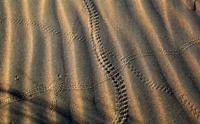
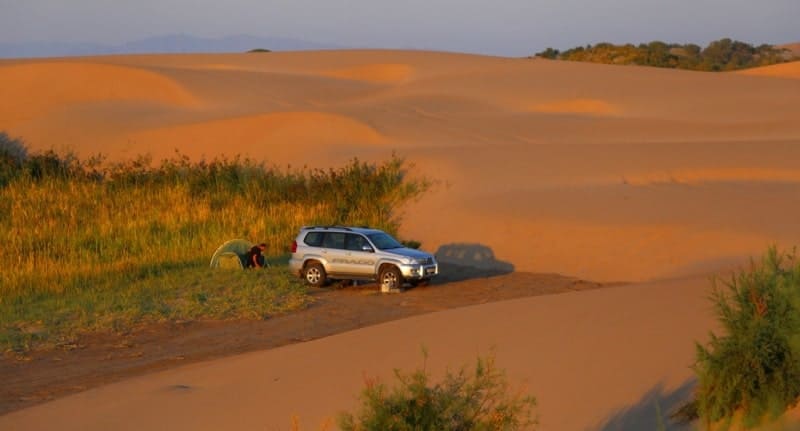
A trip to sands of Big Barsuki.
"The sands fill the southern parts of the Irgiz and Turgai districts. In the Irgiz district, they form two strips north of the Aral Sea, known as the Bolshie and Malye Barsuki. The Big Badgers stretch from Chernyshev Bay in the Aral Sea for 200 miles and reach Lake Chelkar (Chelkar station on the Turkestan Railway), while the Small Badgers (about 100 miles long) cross the railway at Karachokat station.
N. Khokhlov. "Essay on the Turgai Region." 1909.
A trip from Aral Sea through sands of Big Barsuki.
Big Barsuki Sands stretch from northern end of Great Aral Sea for 232 kilometers from south to northwest and further to northeast to village of Zheltyr in Shalkar district of Aktobe region. Majority of sands are located in Shalkar district of Aktobe region, and a small southern end of sands is located in Aral district of Kyzylorda region.
Geographical location of Big Barsuki sands.
Most of the Big Barsuki sands are located in the Aktobe region, and only a small southeastern part of the sands is in the Kyzylorda region. The Big Barsuki Sands are located west of the Small Aral Sea and the northern end of the Greater Aral Sea.
The Big Barsuki Sands occupy depressions extending south from the Turgai Depression and separated by a strip of bedrock. The greatest width of the Big Barsuki Sands, in the southern part, is 34 kilometers. The highest elevation of the sands in the southern part reaches 137 m. a. s. l., and in the northern part, 201 m. a. s. l.
In the southern part, the sands border the small village of Kulandy, which is located in the Aralsky District of the Kyzylorda Region. In the northwestern part of the Big Barsuki Sands, there is the large village and railway junction of Shalkar.
The Kyzylorda-Aktobe railway, 18 kilometers long, runs through the northern part of the sands, from southeast to northwest.
A large salt lake is located in the northern part of the sands on the western side. Shalkar. In the northeast, the sands border the western end of the Moyynkum sands. In the southern part of the sands, to the west, lies the Koshkar Ata sor.
To the west of the sands extend the Donyztau and Shagyrai cliffs.
Relief of Big Barsuki sands.
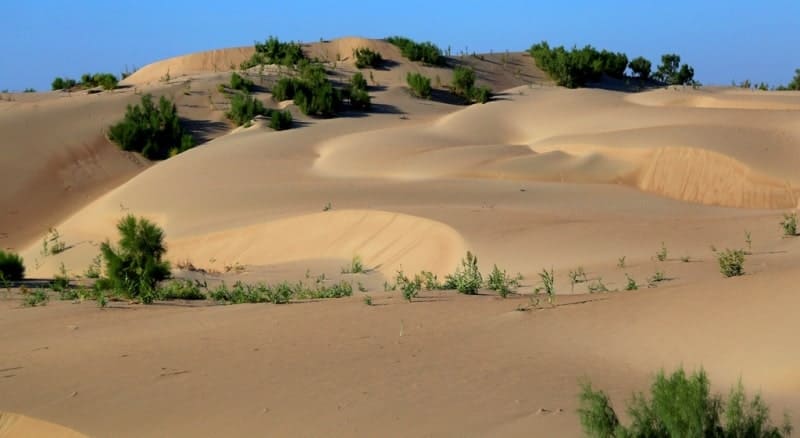
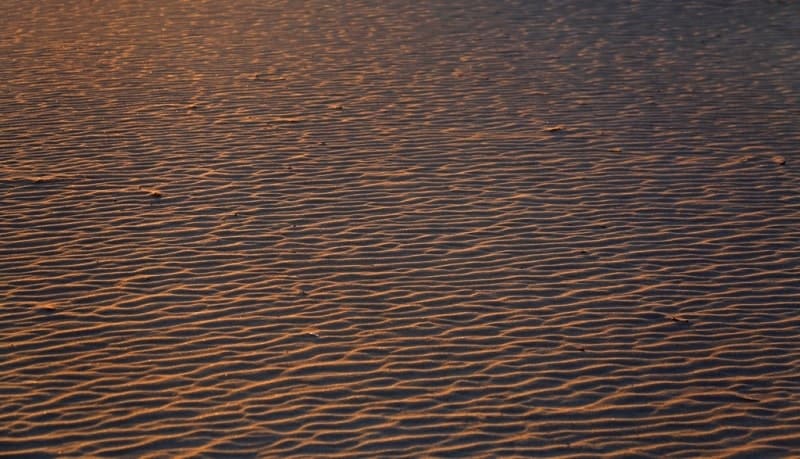
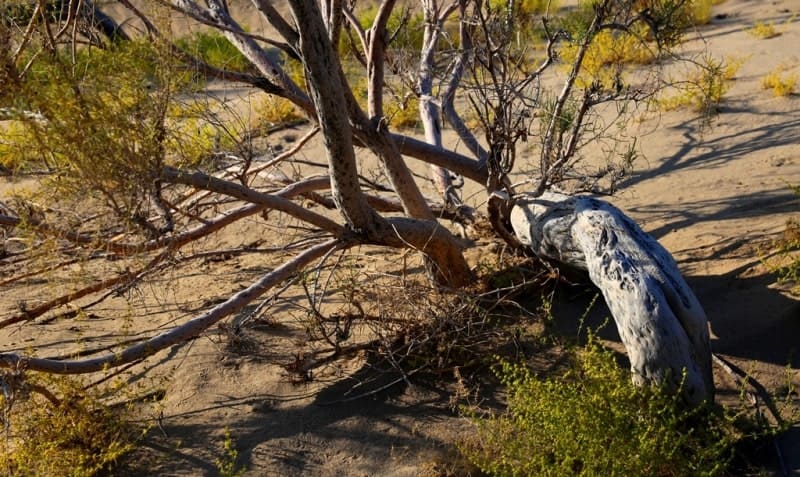
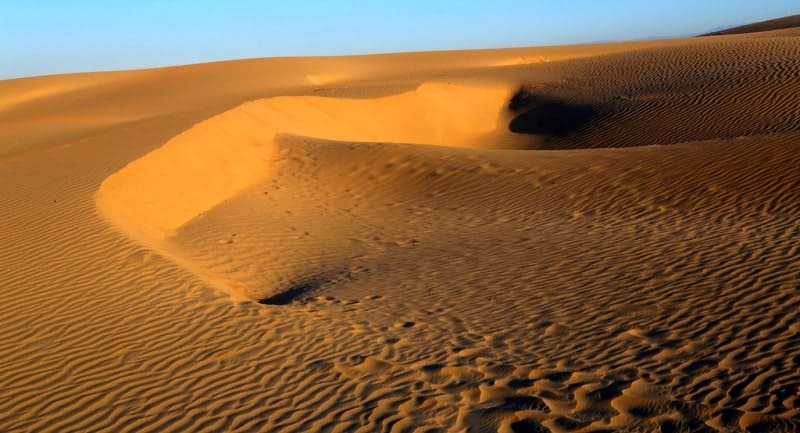
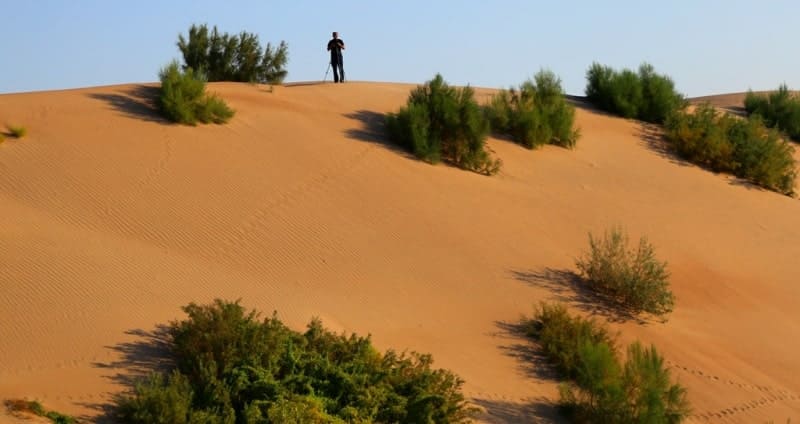
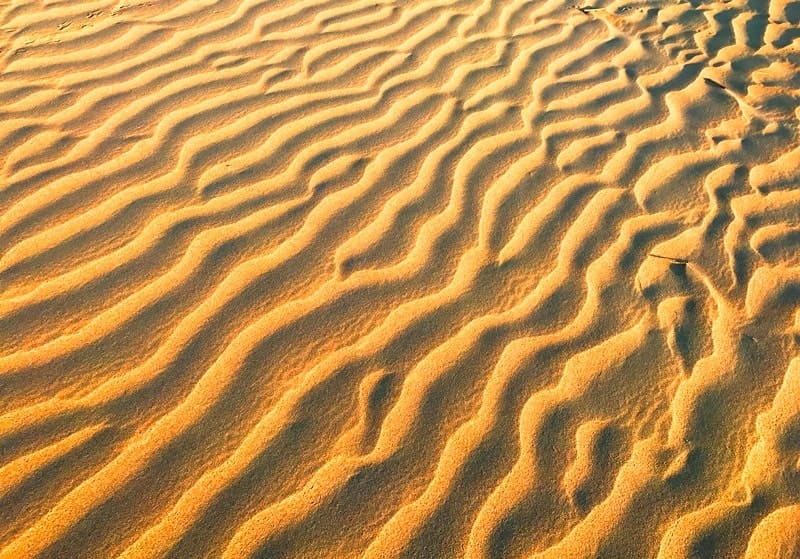
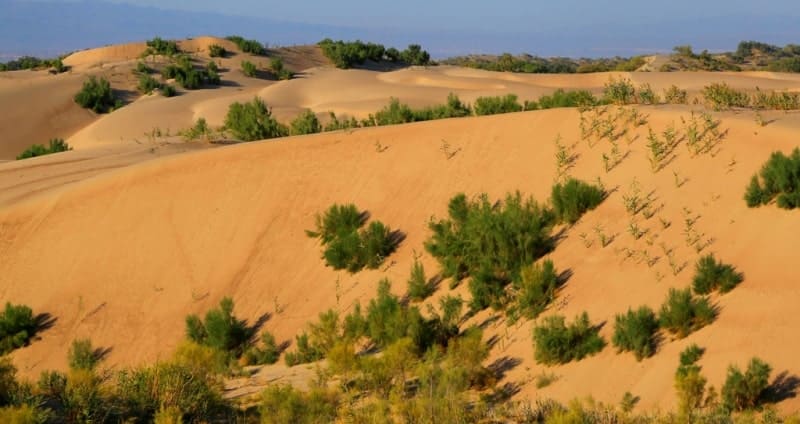
The sand massifs consist primarily of Paleogene sands, and alluvial deposits are found only in the northwestern part of the Bolshie Barsuki sands. Wind forms ridges and dunes from the sand; in flat areas, the sand is fixed by xerophytic shrubs, wormwood, saltwort, and ephemerals.
On the slopes of the hills and ridges, thickets of calligonum, sand acacia, shrubby milkvetch, kandym, and chingil are found. Unique artificial plantings of woody vegetation (pine, aspen, and jida) are present. The trees grow in small groves of up to 0.5 hectares, reaching Heights of 10-12 meters.
The desert area is used for grazing livestock, especially in the summer when there is sufficient water (the groundwater level is relatively high). The climate is sharply continental, with frosty, windy winters and hot, dry summers. Average annual precipitation is 150-200 mm.
Geographic coordinates of Big Barsuki sands: N47°16'52 E59°18'14
Aurhority:
Alexander Petrov.
http://dic.academic.ru
Photos by:
Alexander Petrov.